AI Trading 101: How It Works and How You Can Use It
Discover how AI trading works, its benefits, and how beginners can start using artificial intelligence to make smarter investment decisions in 2025.
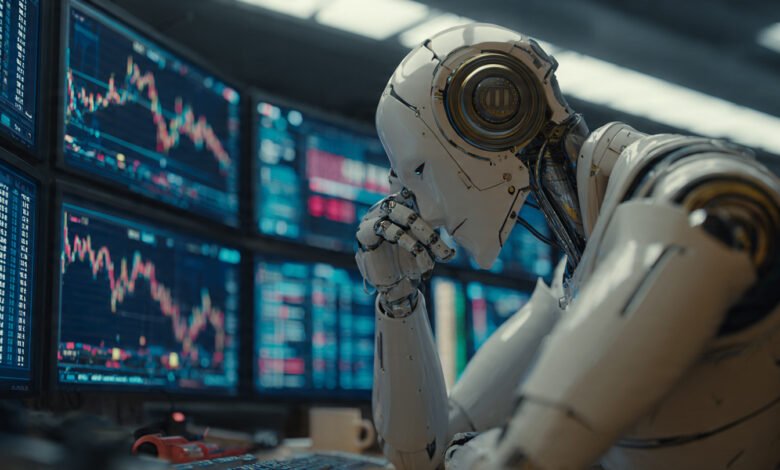
The financial markets never sleep, and neither does artificial intelligence. Right now, AI trading systems are executing thousands of trades per second, analyzing patterns humans could never spot, and making decisions based on data that would take analysts years to process manually. What was once the exclusive domain of hedge funds and institutional investors has become increasingly accessible to everyday traders and investors.
If you’ve been curious about how machine learning algorithms are reshaping the investment landscape, you’re not alone. The AI trading market is growing rapidly, with more platforms offering AI-powered tools to retail investors than ever before. But here’s the thing: understanding how this technology actually works is crucial before you hand over your investment decisions to an algorithm.
This isn’t about replacing human judgment entirely. Instead, AI trading bots and systems are designed to enhance your decision-making process, identify opportunities faster, and help manage risk more effectively. Whether you’re a complete beginner or someone with trading experience looking to leverage new technology, getting a solid grasp on AI trading fundamentals will help you navigate this evolving landscape.
In this guide, we’ll break down exactly how AI trading works, explore the different types of systems available, discuss the real benefits and limitations, and give you practical steps to get started. No hype, no buzzwords—just clear information to help you make informed decisions about whether AI trading fits into your investment strategy.
What is AI Trading?
AI trading refers to the use of artificial intelligence and machine learning technologies to analyze market data, identify trading opportunities, and execute trades automatically or semi-automatically. At its core, it’s about using computer systems that can learn from data and improve their performance over time without being explicitly programmed for every scenario.
Think of it this way: traditional trading relies on human analysis of charts, news, and market indicators. Algorithmic trading using AI takes this process and supercharges it by processing massive amounts of information simultaneously, recognizing complex patterns, and making decisions based on statistical probabilities rather than gut feelings.
Key Components of AI Trading Systems
AI trading platforms typically incorporate several technologies working together:
- Machine learning algorithms that identify patterns in historical and real-time market data
- Natural language processing (NLP) to analyze news articles, social media, and earnings reports
- Predictive analytics to forecast price movements and market trends
- Automated execution systems that place trades based on predefined criteria
- Risk management protocols that monitor positions and adjust strategies accordingly
The distinction between AI trading and traditional algorithmic trading is important. While both use computer programs to execute trades, AI systems can adapt and learn from new data, whereas traditional algorithms follow fixed rules that humans must update manually.
How AI Trading Actually Works
Understanding the mechanics behind AI trading systems helps demystify what can seem like magic. Here’s the step-by-step process most AI trading platforms follow:
Data Collection and Processing
AI trading bots start by gathering enormous amounts of data from multiple sources. This includes historical price data, trading volumes, market indices, economic indicators, news feeds, social media sentiment, and even alternative data like satellite imagery or credit card transactions.
The system continuously ingests this information in real time, cleaning and organizing it into formats the algorithms can analyze. This data preprocessing stage is crucial because the quality of input directly affects the quality of trading decisions.
Pattern Recognition and Analysis
Once the data is ready, machine learning models go to work identifying patterns and relationships. These models have been trained on historical data to recognize situations that typically precede price movements. For example, they might learn that certain combinations of technical indicators, news sentiment, and trading volume patterns often lead to stock price increases.
The algorithms look for correlations humans might miss, like subtle relationships between currency movements and commodity prices, or how specific language in Federal Reserve statements impacts different market sectors.
Signal Generation
When the AI identifies a potential trading opportunity that meets its learned criteria, it generates a trading signal. This signal includes information about what asset to trade, whether to buy or sell, the optimal timing, and suggested position sizing.
Different AI trading strategies generate signals in different ways. Some focus on short-term price movements (day trading or scalping), while others identify longer-term trends (swing trading or position trading).
Trade Execution
Depending on how the system is configured, trades can be executed automatically or presented to a human trader for approval. Automated trading systems connect directly to brokerage accounts through APIs and place orders instantly when conditions are met.
Speed matters here. AI trading algorithms can execute trades in milliseconds, taking advantage of opportunities that disappear before a human could react.
Continuous Learning and Optimization
The most sophisticated AI trading platforms don’t stay static. They continuously evaluate their performance, learn from successful and unsuccessful trades, and adjust their strategies accordingly. This adaptive capability is what separates AI from traditional rule-based systems.
Types of AI Trading Strategies
AI-powered trading encompasses several distinct approaches, each suited to different market conditions and investment goals:
High-Frequency Trading (HFT)
This strategy uses AI algorithms to execute thousands or even millions of trades per day, profiting from tiny price discrepancies that exist for fractions of a second. HFT requires significant infrastructure and is typically used by institutional investors rather than retail traders.
Sentiment Analysis Trading
These systems use natural language processing to analyze news articles, earnings calls, social media posts, and other text sources to gauge market sentiment. When sentiment around a particular stock or sector shifts significantly, the AI generates trading signals.
A study by the National Bureau of Economic Research has shown that sentiment analysis can provide predictive information about future returns, though the relationship is complex and constantly evolving.
Technical Analysis Automation
AI trading bots excel at technical analysis, identifying chart patterns, support and resistance levels, and momentum indicators across hundreds of assets simultaneously. They can spot complex patterns like head-and-shoulders formations or Fibonacci retracements much faster than human analysts.
Quantitative Trading
This approach uses mathematical and statistical models to identify trading opportunities. Machine learning enhances traditional quantitative methods by discovering non-linear relationships in data that simpler statistical models might miss.
Arbitrage Detection
AI systems can identify price discrepancies across different markets or related assets and execute arbitrage trades before the opportunity disappears. This requires lightning-fast analysis and execution, which AI handles particularly well.
Benefits of Using AI for Trading
Understanding why traders and investors are adopting AI trading systems helps clarify whether this technology makes sense for your situation:
Speed and Efficiency
AI trading algorithms process information and execute trades exponentially faster than humans. While you’re still reading a news headline, an AI system has already analyzed it, checked historical patterns for similar situations, and potentially executed a trade.
This speed advantage is particularly valuable in volatile markets where opportunities appear and vanish in seconds.
Emotion-Free Decision Making
Fear and greed drive many poor investment decisions. Automated trading systems follow their programming without the psychological biases that plague human traders. They don’t panic during market crashes or get overconfident during bull runs.
24/7 Market Monitoring
Global markets operate around the clock. AI trading bots never sleep, never take vacations, and can monitor multiple markets simultaneously, ensuring you never miss opportunities when you’re away from your screen.
Processing Complex Data Sets
The volume of information affecting modern markets exceeds human processing capacity. Artificial intelligence can analyze thousands of data points simultaneously, identifying subtle patterns and correlations that would be impossible for human analysts to detect.
Backtesting and Optimization
Before risking real capital, AI trading strategies can be tested against years of historical data to evaluate their potential performance. The systems can also optimize parameters to improve results, a process that would take humans weeks or months.
Reduced Transaction Costs
By identifying optimal entry and exit points and executing trades efficiently, AI systems can reduce the impact of trading costs and slippage on your overall returns.
Limitations and Risks of AI Trading
Being realistic about what AI trading can and can’t do is essential for successful implementation:
Black Box Problem
Many machine learning models, particularly deep learning systems, operate as “black boxes.” They make decisions based on patterns they’ve learned, but they can’t always explain why they made a particular choice. This opacity can be uncomfortable when real money is at stake.
Overfitting Risk
AI algorithms trained on historical data might identify patterns that worked in the past but won’t work in the future. This overfitting problem means a system might perform brilliantly in backtesting but fail in live markets.
Technology Dependence
AI trading systems rely on technology infrastructure. Internet outages, platform glitches, data feed errors, or API problems can all disrupt trading operations. You need contingency plans for technical failures.
Market Changes and Black Swan Events
Machine learning models learn from historical data, which means they may struggle with unprecedented market conditions. The 2020 COVID-19 crash, for example, created market dynamics that no historical training data could have predicted.
Regulatory and Compliance Issues
The regulatory landscape around algorithmic trading continues to evolve. Different jurisdictions have different rules about automated trading, and staying compliant requires ongoing attention.
Initial Capital and Costs
Quality AI trading platforms often require significant subscription fees or minimum account balances. Building custom systems requires even more substantial investments in technology and expertise.
No Guaranteed Profits
This point can’t be stressed enough: AI trading is not a path to guaranteed returns. Even the most sophisticated systems experience losing trades and drawdown periods. Anyone promising otherwise is either uninformed or dishonest.
How to Get Started with AI Trading
If you’ve decided to explore AI trading, here’s a practical roadmap for beginners:
Step 1: Educate Yourself
Before investing a dollar, invest time in learning. Understand basic trading concepts, market mechanics, and risk management principles. Familiarize yourself with how machine learning and AI algorithms work at a conceptual level.
Resources like Investopedia offer comprehensive guides on trading fundamentals, technical analysis, and algorithmic trading concepts.
Step 2: Define Your Goals and Risk Tolerance
Be specific about what you’re trying to achieve. Are you looking for steady income, long-term growth, or active trading profits? How much capital can you afford to lose without affecting your lifestyle?
Your goals will determine which AI trading strategies make sense for your situation.
Step 3: Choose the Right Platform
Several AI trading platforms cater to retail investors with varying levels of experience:
Robo-advisors like Betterment or Wealthfront use AI to build and manage diversified portfolios automatically. These are good starting points for beginners interested in passive investing rather than active trading.
AI-enhanced trading platforms like Trade Ideas or TrendSpider provide AI-powered tools for pattern recognition and signal generation while leaving execution decisions to you.
Fully automated trading platforms like Cryptohopper (for cryptocurrency) or MetaTrader with AI plugins execute trades automatically based on AI signals.
Evaluate platforms based on:
- Transparency about how their AI works
- Track record and verified performance data
- Fees and minimum investment requirements
- Asset classes supported (stocks, forex, crypto, etc.)
- Level of customization and control
- Customer support and educational resources
- Security measures and regulatory compliance
Step 4: Start with Paper Trading
Most AI trading systems offer paper trading or simulation modes where you can test strategies with virtual money. Use this feature extensively before committing real capital. Monitor performance over at least several months to understand how the system behaves in different market conditions.
Pay attention to drawdown periods (how much the account value drops from peak to trough) as much as you celebrate gains.
Step 5: Begin with Small Capital
When you’re ready to trade with real money, start with amounts you can genuinely afford to lose. Even if you have significant capital available, begin small while you learn how the AI trading bot performs with your actual psychology involved.
Real money creates real emotions that don’t exist in paper trading.
Step 6: Monitor and Adjust
AI trading isn’t a “set it and forget it” solution. Regularly review performance, understand why the system made particular trades, and be prepared to adjust settings or even switch systems if results don’t meet expectations.
Set clear criteria for success and failure before you start. Decide in advance what performance would cause you to stop using a particular system.
Step 7: Practice Sound Risk Management
Never risk more than a small percentage (typically 1-2%) of your total capital on any single trade. Use stop-loss orders to limit potential losses. Diversify across multiple strategies or asset classes rather than concentrating everything in one approach.
Even the best AI trading algorithms will have losing periods. Proper risk management ensures these periods don’t destroy your account.
Popular AI Trading Platforms for Beginners
Here’s an overview of some accessible AI trading platforms suitable for those getting started:
Trade Ideas
Focuses on stock trading with AI-powered scanning and pattern recognition. The platform generates trade ideas in real time and provides backtesting capabilities. It’s particularly strong for day traders and swing traders interested in equities.
TrendSpider
Offers automated technical analysis for stocks, forex, and crypto. The AI identifies chart patterns, trends, and support/resistance levels automatically. It’s designed for traders who want AI assistance but prefer to make final decisions themselves.
Kavout
Provides AI-based stock rankings and portfolio management tools. The platform uses machine learning to score stocks based on multiple factors, helping investors identify potential opportunities.
MetaTrader with AI Plugins
MetaTrader 4 and 5 support various AI-powered expert advisors (EAs) that can execute automated trading strategies for forex and CFDs. The platform offers extensive customization but requires more technical knowledge.
Composer
Allows users to build automated trading strategies using a visual editor without coding. The platform uses AI to optimize strategy parameters and can execute trades automatically in your brokerage account.
The Future of AI Trading
The AI trading landscape continues to evolve rapidly. Several trends are shaping where this technology is heading:
Increased Accessibility
As competition increases and technology improves, AI trading tools are becoming more affordable and user-friendly. What required millions in infrastructure a decade ago can now run on modest computing resources.
Integration with Decentralized Finance
AI algorithms are beginning to interact with DeFi protocols, managing liquidity provision, yield farming, and arbitrage opportunities in cryptocurrency markets automatically.
Regulatory Development
Governments and financial regulators are developing frameworks specifically for algorithmic trading. These regulations will likely increase transparency requirements and establish clearer rules for AI system deployment.
Hybrid Human-AI Systems
Rather than fully autonomous trading, the future likely involves closer collaboration between human judgment and AI analysis. Humans will focus on strategic decisions while AI handles execution and monitoring.
Quantum Computing Integration
As quantum computing becomes practical, AI trading systems will gain unprecedented processing power, potentially identifying patterns and opportunities invisible to current technology.
Conclusion
AI trading represents a significant shift in how individuals and institutions approach financial markets. By leveraging machine learning, natural language processing, and advanced analytics, AI systems can process information faster and identify patterns more effectively than humans alone. However, it’s not a magical solution that guarantees profits or eliminates risk. The most successful approach combines AI’s computational advantages with human judgment, clear goals, and disciplined risk management. Whether you’re exploring robo-advisors for passive investing or considering more active AI trading bots, start with education, test thoroughly with paper trading, and never invest more than you can afford to lose. As this technology continues to evolve and become more accessible, understanding how AI trading works gives you the foundation to make informed decisions about whether and how to incorporate it into your investment strategy.