10 Common Forex Trading Mistakes and How to Avoid Them
Discover 10 critical forex trading mistakes that cost traders money. Learn proven strategies to avoid common pitfalls and protect your trading capital today.
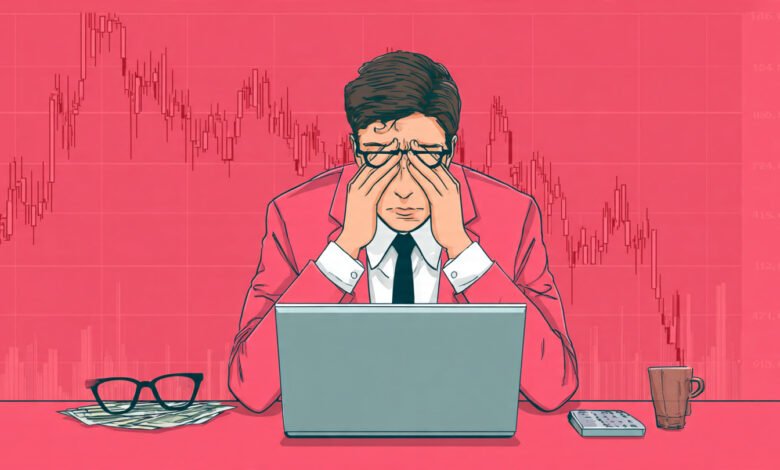
The foreign exchange market pulls in millions of traders worldwide with promises of profit and financial freedom. Yet here’s the uncomfortable truth: somewhere between 70% to 90% of forex traders lose money. That’s not because the forex market is rigged or impossible to beat. It’s because most people keep making the same common forex trading mistakes over and over again.
I’ve seen it countless times. A new trader opens an account with high hopes, makes a few trades, sees some early success, and then crashes hard. Their trading capital evaporates, and they’re left wondering what went wrong. The answer is almost always the same: they fell into predictable traps that experienced traders learned to avoid years ago.
The good news? These forex trading mistakes are completely preventable. You don’t need some secret strategy or insider knowledge. You just need to understand what goes wrong and build better habits from day one. Whether you’re a beginner trader just starting out or someone who’s been struggling to find consistency, this guide will walk you through the most damaging mistakes in forex trading and exactly how to sidestep them. Let’s make sure your trading journey doesn’t become another cautionary tale.
Understanding Why Forex Traders Fail
Before we jump into specific mistakes, let’s talk about why people fail at trading in the first place. The forex market isn’t like buying stocks and holding them for years. It’s fast, it’s volatile, and it punishes sloppy thinking immediately.
Most traders treat forex like gambling. They take positions based on gut feelings, chase after quick wins, and ignore basic risk management. Then when losses pile up, they double down trying to win it back. This cycle destroys trading accounts faster than almost anything else.
The currency market trades over $7 trillion daily. That means you’re competing against professional traders, institutional investors, and sophisticated algorithms. Without proper preparation and discipline, you’re walking into a highly competitive arena unprepared.
The 10 Most Common Forex Trading Mistakes
1. Trading Without a Solid Trading Plan
Not having a trading plan is like driving cross-country without a map. You might get somewhere, but it probably won’t be where you wanted to go.
A trading plan isn’t just a nice-to-have document. It’s your rulebook. It tells you when to enter trades, when to exit, how much to risk, and what currency pairs to focus on. Without one, every decision becomes emotional and reactive.


Your plan should cover:
- Which trading strategy you’ll use
- Your risk tolerance and maximum loss per trade
- Entry and exit rules based on technical indicators or fundamental analysis
- How you’ll manage winning and losing positions
- Daily and weekly profit targets
Most beginner traders skip this step because they want to start making money immediately. But professional traders will tell you: planning prevents poor performance. Create your plan before you risk a single dollar, test it on a demo account, and stick to it religiously.
2. Ignoring Risk Management Principles
Poor risk management is the number one account killer in forex trading. You can have the best trading strategy in the world, but if you don’t protect your capital, you’ll still go broke.
The 1% rule is a good starting point: never risk more than 1-2% of your trading capital on any single trade. If you have a $10,000 account, that means risking no more than $100-200 per trade. This might seem conservative, but it’s what keeps you in the game during losing streaks.
Consider this: if you risk 10% per trade, ten consecutive losses wipe you out completely. But if you risk 2% per trade, you’d need 50 straight losses to drain your account. The math is simple, but most traders ignore it until it’s too late.
Risk management also means:
- Always using stop-loss orders to cap potential losses
- Setting take-profit levels before entering trades
- Maintaining a healthy risk-reward ratio (aim for at least 1:2)
- Never risking money you can’t afford to lose
3. Misunderstanding and Misusing Leverage
Leverage is seductive. It lets you control large positions with small amounts of capital. A 100:1 leverage ratio means your $1,000 controls $100,000 in the market. Sounds great, right?
Here’s the problem: leverage magnifies both gains and losses. That same 100:1 leverage that could double your money can also wipe out your entire account with a tiny price movement.
Many new traders don’t fully understand this. They see leverage as “free money” to amplify profits. What they miss is that high leverage reduces their margin for error to almost nothing. A currency pair that moves against them by just 1% can trigger a margin call and liquidate their position.
The solution? Use leverage conservatively, especially when starting out. Just because your broker offers 500:1 leverage doesn’t mean you should use it. Many successful traders use leverage of 10:1 or less. They’d rather make steady gains than risk catastrophic losses.
Before using leverage:
- Fully understand how it affects your position size
- Calculate your actual exposure, not just your margin requirement
- Practice with leverage on a demo account first
- Start small and only increase as you gain experience
4. Letting Emotions Control Your Trading Decisions
Emotional trading destroys more accounts than any technical mistake. Fear and greed are powerful forces, and the forex market amplifies them both.
When you’re winning, greed whispers: “Don’t close yet, it could go higher.” When you’re losing, fear screams: “It has to turn around, just wait a little longer.” Neither voice is your friend.
Common emotional mistakes include:
- Revenge trading: Trying to immediately recover losses by placing impulsive trades
- Holding losing positions too long because you can’t accept being wrong
- Closing winning trades too early out of fear they’ll reverse
- Trading out of boredom when no good setups exist
- Overconfidence after a few wins leading to reckless position sizing
The antidote to emotional trading is having clear rules and following them mechanically. When your trading plan says exit, you exit. No second-guessing, no “just one more minute” to see if it turns around.
Professional traders treat trading like a business, not a casino. They accept that losses are part of the process and don’t let individual trades affect their emotional state. This psychological discipline often matters more than technical knowledge.
5. Overtrading and Chasing Every Opportunity
Overtrading happens when you place too many trades, often out of impatience or the need to constantly be “doing something.” The forex market is open 24 hours a day during the week, which makes this trap especially easy to fall into.
Here’s what many traders don’t realize: more trades don’t equal more profit. In fact, overtrading usually leads to:
- Higher transaction costs eating into your profits
- Lower-quality trade setups since you’re forcing opportunities
- Mental exhaustion leading to poor decisions
- Increased exposure to market volatility
Quality beats quantity every time. Professional traders might only take a handful of high-probability trades each week. They wait patiently for their strategy to signal a clear opportunity, then execute with confidence.
To avoid overtrading:
- Set a maximum number of trades per day or week
- Only trade when your strategy gives a clear signal
- Accept that doing nothing is sometimes the best move
- Remember that capital preservation is just as important as profit generation
6. Failing to Use Stop-Loss Orders Properly
Not using stop-loss orders is financial suicide in forex trading. A stop-loss automatically closes your trade when the market moves against you by a predetermined amount, limiting your loss.
Yet many traders don’t use them, or use them incorrectly. Common mistakes include:
- Not setting stop-losses at all, hoping losing trades will eventually reverse
- Placing stop-losses too tight, getting stopped out by normal market volatility
- Moving stop-losses further away when a trade goes bad (this defeats the entire purpose)
- Setting arbitrary stop-loss levels without considering market structure
Your stop-loss should be based on your trading strategy and risk tolerance, not random numbers. Look at support and resistance levels, technical indicators, and typical price movements for your chosen currency pairs.
Once you set a stop-loss, never move it to increase your risk. If the trade hits your stop, accept the loss and move on. That’s the discipline that separates successful traders from everyone else. Many professional traders use stop-loss orders on every single trade, no exceptions.
7. Neglecting to Learn and Practice First
Jumping straight into live trading without education or practice is like performing surgery after watching a few YouTube videos. It won’t end well.
The forex market is complex. You need to understand:
- How currency pairs work and what affects their values
- Technical analysis tools like moving averages, RSI, and MACD
- Fundamental analysis including economic indicators and central bank policies
- How different market sessions affect volatility
- The mechanics of leverage, margin, and position sizing
Fortunately, learning resources are everywhere. Reputable forex brokers offer educational materials, there are countless books on trading strategies, and YouTube has thousands of tutorial videos. Organizations like the Bank for International Settlements provide valuable insights into global currency markets, while sites like Investopedia offer comprehensive forex education.
Even more important than education is practice. Every legitimate broker offers a demo account where you can trade with virtual money in real market conditions. Use it. Spend weeks or even months testing your trading plan before risking real capital. Learn from mistakes when they cost you nothing.
8. Ignoring Market Conditions and News Events
The forex market doesn’t exist in a vacuum. Currency prices are constantly influenced by economic reports, central bank decisions, geopolitical events, and global news.
Trading right before major news events is incredibly risky. Market volatility can spike dramatically, spreads can widen, and prices can gap through your stop-loss orders. Yet many beginner traders don’t even check the economic calendar before placing trades.
Major market movers include:
- Central bank interest rate decisions
- Employment reports like Non-Farm Payrolls
- Inflation data (CPI, PPI)
- GDP releases
- Political events and elections
Smart traders either avoid trading around these events or adjust their strategy to account for increased volatility. At minimum, you should know what major announcements are coming each week and how they might affect your positions.
Understanding both technical and fundamental analysis gives you a complete picture. Technical patterns tell you what the market is doing. Fundamentals explain why it’s happening.
9. Poor Position Sizing and Portfolio Management
Position sizing determines how many units of a currency pair you buy or sell. Get it wrong, and even winning trades can hurt your account.
Many traders use position sizes that are either too large (exposing themselves to excessive risk) or completely random (no strategy at all). Your position size should be calculated based on:
- Your total trading capital
- The distance to your stop-loss
- Your risk percentage per trade
- The pip value of the currency pair you’re trading
Different currency pairs have different pip values, which many new traders overlook. A pip movement in EUR/USD might be worth $10 on a standard lot, while the same movement in EUR/GBP is worth around $13. If you don’t account for these differences, you might be risking more (or less) than you think.
Professional traders use position sizing calculators to ensure every trade risks exactly what they intend. This removes guesswork and keeps risk consistent across all trades.
10. Lack of Trading Discipline and Patience
Discipline and patience tie everything together. You can know all the right strategies, understand risk management, and have a solid trading plan, but without discipline to follow through, none of it matters.
Lack of trading discipline shows up as:
- Deviating from your trading plan when things get tough
- Taking trades that don’t meet your criteria because you’re impatient
- Letting one bad trade affect your next decision
- Constantly changing strategies instead of mastering one
- Checking your trades obsessively instead of letting them play out
The forex market rewards patience. Warren Buffett famously said: “The market is a device for transferring money from the impatient to the patient.” This applies to forex trading just as much as stock investing.
Successful traders stick to their rules even when it’s hard, especially when it’s hard. They understand that trading is a long-term game. One trade doesn’t make or break them. They focus on executing their process correctly and let the results take care of themselves over time.
How to Avoid These Common Forex Mistakes
Knowing the mistakes is half the battle. Actually avoiding them requires deliberate action. Here’s your roadmap:
1. Develop a comprehensive trading plan before you start. Write it down. Include your strategy, risk management rules, and trading schedule. Treat it as your business plan because that’s exactly what it is.
2. Start with a demo account and trade it seriously for at least two months. Pretend the virtual money is real. This builds good habits without financial risk.
3. Educate yourself continuously. Read books on forex trading, take online courses, follow reputable trading educators. The learning never stops.
4. Keep a trading journal. Record every trade, including your reasoning, emotions, and results. Review it weekly to identify patterns in your mistakes and successes.
5. Focus on risk first, profits second. Calculate your risk before every trade. Make sure you’re comfortable losing that amount. Only then think about potential profits.
6. Use proper position sizing on every trade. Use calculators to ensure you’re risking the right percentage based on your stop-loss distance.
7. Control your emotions through routines and rules. Take breaks after losses. Don’t trade when angry, tired, or distracted. Meditation and exercise help many traders maintain psychological balance.
8. Be patient with opportunities. Wait for your strategy to give clear signals. Remember that not trading is a position too.
9. Review and adapt regularly. Markets change. Your strategy might need adjustments. But make changes based on data and analysis, not emotions or impulse.
10. Accept losses as part of the process. Even the best traders lose on 40-50% of their trades. What matters is that winners are bigger than losers.
The Role of Proper Risk-Reward Ratios
Every trade should have a clear risk-reward ratio. This compares how much you stand to lose versus how much you could gain.
A 1:2 risk-reward ratio means you’re willing to risk $100 to potentially make $200. A 1:3 ratio means risking $100 for a $300 profit target. Most professional traders aim for ratios of 1:2 or better.
Here’s why this matters: with a 1:2 risk-reward ratio, you can win only 40% of your trades and still be profitable. The math is simple. If you take 10 trades:
- 6 losses at $100 each = -$600
- 4 wins at $200 each = +$800
- Net profit = +$200
Without proper ratios, you need to win far more often just to break even. Many struggling traders win 60% of their trades but still lose money because their losses are bigger than their wins.
Set your take-profit and stop-loss levels before entering trades. Make sure the potential reward justifies the risk. If it doesn’t, skip the trade.
The Importance of Continuing Education
The forex market evolves constantly. New trading strategies emerge, market dynamics shift, and technology changes how we trade. Standing still means falling behind.
Successful traders invest in their education throughout their careers. They:
- Read industry publications and analysis
- Attend webinars and trading conferences
- Learn from their own trading data
- Study market history and patterns
- Stay updated on global economic developments
- Connect with other traders to share insights
Your competition isn’t taking breaks from learning. Why should you? Treat forex trading as a skill that requires continuous improvement, like any profession.
Conclusion
Common forex trading mistakes aren’t mysterious or unavoidable. They’re predictable patterns that trap traders who don’t know better. The difference between those who succeed and those who fail often comes down to discipline, education, and proper risk management. Stop chasing quick profits and focus on building solid trading habits. Use a demo account until your strategy is proven.
Always protect your capital with stop-loss orders and smart position sizing. Control your emotions and stick to your trading plan no matter what. The forex market will always be there, full of opportunities. But you need to be there too, with your trading capital intact and your skills sharp. Avoid these forex mistakes, respect the market, and give yourself the chance to join the small percentage of traders who actually make consistent profits.