Best Forex Brokers for Swing Trading
Compare the best forex brokers for swing trading in 2026, from spreads to swap fees, so you can hold positions with confidence.
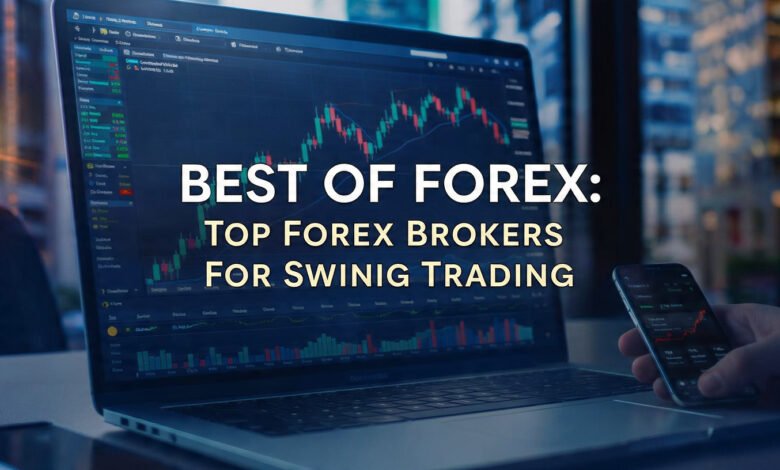
Finding the best forex brokers for swing trading takes more than scrolling through a list of household names. Swing traders hold positions for days or weeks instead of minutes, which means the things that matter most to a scalper or day trader, like ultra-tight spreads during a two-minute window, matter a lot less here. What matters instead is how a broker treats you once a trade is open overnight: the swap fees you’ll pay, the charting tools you’ll lean on to plan entries and exits, and whether the platform actually holds up when you’re not staring at it every second.
A lot of broker “best of” lists are written for day traders and then lazily rebranded for swing traders by swapping a headline. That’s a problem, because a broker with rock-bottom scalping spreads but brutal overnight financing charges can quietly eat your profits over a two-week hold. Swing trading rewards patience, and your broker choice should support that patience rather than undermine it.
This guide walks through what actually matters when picking a forex broker for swing trading, profiles seven brokers worth considering in 2026, and covers the mistakes that trip up traders who choose a broker based on marketing instead of fit. By the end, you should have a clear framework for matching a broker to your own trading style, account size, and risk tolerance.
What Makes a Good Forex Broker for Swing Trading
Not every broker is built with multi-day positions in mind. Here’s what separates a genuinely good swing trading broker from one that just happens to offer forex.
Regulation and Safety
Since you’re holding positions longer, your capital sits with the broker longer too. That makes regulatory oversight non-negotiable. Look for brokers licensed by top-tier regulators such as the FCA (UK), ASIC (Australia), CFTC/NFA (US), or CySEC (Cyprus). Regulated brokers are required to segregate client funds from company funds, which protects your money if the broker runs into financial trouble. You can verify a broker’s registration status directly through the National Futures Association’s BASIC database, which lists disciplinary actions and licensing details for US-regulated firms.
Avoid offshore brokers offering unrealistic leverage or bonuses with no verifiable regulatory home. If something goes wrong, you’ll have no recourse.
Spreads, Commissions, and Overnight Fees
This is where swing trading economics diverge sharply from day trading. Since your trades stay open across multiple sessions, and often across weekends, overnight financing (also called swap or rollover fees) becomes a real cost center. A broker with tight intraday spreads but punishing swap rates can cost you more over a two-week hold than a broker with slightly wider spreads and fair overnight rates.
When comparing brokers, ask:
- What are the swap rates on the major pairs you actually trade?
- Does the broker offer swap-free (Islamic) accounts if relevant to you?
- Are there separate weekend or holiday financing charges?
- Is pricing commission-based, spread-based, or a hybrid?
Trading Platforms and Charting Tools
Swing traders live and die by technical analysis on higher timeframes, daily and weekly charts, moving averages, trendlines, and support/resistance zones. A forex broker for swing trading should offer platforms with strong charting, whether that’s MetaTrader 4/5, TradingView integration, or a solid proprietary platform. Multi-timeframe analysis, drawing tools, and the ability to set alerts for price levels you’re watching (since you won’t be glued to the screen) all matter more here than raw execution speed.


Currency Pair Selection
Swing traders often diversify across majors, minors, and even some exotics to find setups. A broker offering a wide range of currency pairs, ideally 50 or more, gives you more opportunities to find clean technical setups instead of forcing trades on a handful of majors.
Risk Management Tools
Because positions stay open longer, they’re exposed to more news events, central bank decisions, and weekend gaps. Look for brokers offering guaranteed stop-loss orders, negative balance protection, and clear margin call policies. These features matter far more to a swing trader riding a position through a Federal Reserve announcement than to a scalper in and out within seconds.
Best Forex Brokers for Swing Trading in 2026
Here’s a rundown of brokers that consistently stand out for swing trading based on regulation, overnight costs, platform quality, and pair selection.
1. IC Markets
IC Markets is a well-regulated Australian broker known for tight spreads and strong execution across MT4, MT5, and cTrader. For swing traders, the appeal is the combination of low trading costs with genuinely useful charting through MT5 and cTrader, both of which support multi-timeframe analysis and custom indicators. IC Markets also offers a wide range of currency pairs alongside commodities and indices, which is handy if you like to diversify your swing setups beyond forex alone.
- Strong regulatory oversight (ASIC, CySEC)
- Raw spreads from 0.0 pips on the Raw account
- MT4, MT5, and cTrader platform support
2. FOREX.com
FOREX.com has built a reputation over two decades as a trusted name for retail forex trading, and it’s a solid pick for swing trading forex thanks to its advanced charting and customizable layouts. Its proprietary platform is genuinely well designed, and the broker also supports MT4 for traders who prefer that ecosystem. FOREX.com is regulated in multiple jurisdictions, including by the CFTC and NFA in the US, giving it credibility for traders who prioritize oversight.
- RAW Pricing accounts with spreads from 0.0 pips plus a small commission
- Extensive educational resources, including webinars and tutorials
- Regulated across several major jurisdictions
3. OANDA
OANDA is a favorite among traders who lean heavily on technical analysis, largely because of its native TradingView chart integration. That’s a genuine advantage for swing trading, since TradingView’s charting tools are some of the best available for spotting multi-day and multi-week patterns. OANDA also offers flexible position sizing with no minimum trade size, which is useful for traders managing risk carefully across several open swing positions at once.
- TradingView charting built directly into the platform
- No minimum deposit requirement on standard accounts
- Transparent, published swap rates
4. Pepperstone
Pepperstone is known for low-cost trading and a wide selection of platforms, including MT4, MT5, cTrader, and TradingView. For swing traders, the broker’s Razor account offers tight raw spreads, and its overnight financing rates are competitive compared to many retail brokers. Pepperstone is regulated by the FCA and ASIC, among others, and has a reputation for reliable execution even during volatile news events, something that matters when your swing position gets caught in an unexpected market move.
- Multiple platform choices, including TradingView
- Competitive overnight swap rates
- Strong regulatory footprint across several regions
5. Interactive Brokers
Interactive Brokers isn’t a pure forex broker, it’s a full multi-asset platform covering stocks, options, futures, ETFs, and forex. That breadth is actually an advantage for swing traders who like to diversify across asset classes rather than trading currencies in isolation. Its Trader Workstation platform is powerful, if a bit more complex to learn than a typical forex-only platform, and its forex pricing is genuinely competitive for traders with larger account sizes.
- Access to 160+ markets across multiple asset classes
- Institutional-grade execution and low forex markups
- Steeper learning curve for beginners
6. FP Markets
FP Markets stands out for tight spreads on commodities and precious metals alongside forex, which makes it a strong option for swing traders who like to trade gold or oil setups alongside currency pairs. Its MT5 platform offers more than 80 analytical tools, and the broker supports algorithmic trading through Expert Advisors if you want to combine discretionary swing setups with automated rules.
- Tight pricing on metals and energies, not just forex
- MT5 platform with extensive charting tools
- Supports Expert Advisor automation
7. tastyfx
tastyfx, part of the IG Group family, offers commission-free trading with floating spreads and some of the tightest overnight charges in the industry, a genuine advantage for swing trading where those charges compound over time. Its proprietary platform includes more than 70 analytical tools and chart configurations, and the broker is backed by a publicly listed parent company with solid regulatory standing.
- Tight overnight financing charges, ideal for multi-day holds
- 70+ analytical tools on the proprietary platform
- Backed by IG Group’s regulatory track record
How to Choose the Right Broker for Your Swing Trading Style
There’s no single “best” broker for everyone. The right forex broker for swing trading depends on a few personal factors:
- Account size. Larger accounts can absorb commission-based pricing more easily and may qualify for tighter spreads or dedicated account management.
- Preferred platform. If you already know MT4 or MT5 well, prioritize brokers that support it cleanly rather than forcing yourself to learn a new proprietary platform.
- Trading frequency. If you open just a handful of trades a month, overnight swap costs matter less than if you’re constantly rotating positions across many pairs.
- Instrument diversity. If you like combining forex with commodities, indices, or stocks in your swing strategy, pick a broker with strong offerings across all of them rather than one that’s forex-only.
- Regulatory comfort. Some traders are comfortable with offshore regulation in exchange for higher leverage; others want the added protection of tier-one oversight. Know which trade-off matters to you before you commit.
A good practice, echoed by experienced traders, is to open a demo account with two or three shortlisted brokers and actually run your strategy on each one for a few weeks. Spreads and swap rates listed on a website don’t always reflect real-world conditions, and testing execution quality yourself is the only reliable way to confirm a broker’s claims. For a deeper look at swing trading fundamentals and risk management, Investopedia’s swing trading guide is a solid reference point for building out your strategy alongside your broker research.
Common Mistakes Swing Traders Make When Picking a Broker
- Chasing the tightest spreads without checking swap fees. A broker with a 0.1 pip spread advantage can still cost you more over a two-week hold if its overnight rates are high.
- Ignoring regulation because leverage looks attractive. High leverage offshore brokers can seem appealing, but weak oversight increases the risk of withdrawal issues or outright fund loss.
- Overlooking platform stability. If a platform frequently disconnects or lags during news events, that’s a serious problem for a position you’re relying on to execute a stop-loss correctly.
- Not testing customer support before committing real capital. Email support a broker a few times before funding an account. Response time and quality tell you a lot about how they’ll treat you if something goes wrong mid-trade.
- Assuming bigger brand names are automatically the best fit. Reputation matters, but your personal trading style, pair preferences, and account size should drive the decision more than name recognition alone.
Frequently Asked Questions
What is the best currency pair for swing trading?
There’s no universal answer, but highly liquid pairs like EUR/USD, GBP/USD, and USD/JPY tend to offer cleaner technical patterns and lower relative spreads, making them a common starting point for swing traders.
Do I need a broker with low spreads for swing trading?
Spreads matter less for swing trading than for scalping, since you’re not paying that cost repeatedly within minutes. Overnight swap fees and platform quality tend to matter more over a multi-day hold.
Is swing trading forex profitable?
It can be, but profitability depends on strategy, discipline, and risk management rather than the broker alone. A good broker supports your strategy; it doesn’t replace the need for one.
How much capital do I need to start swing trading forex?
Many regulated brokers allow you to open an account with a modest deposit, sometimes as low as $100 to $500, though a larger buffer helps you manage risk properly across multiple open positions without overleveraging.
Conclusion
Choosing among the best forex brokers for swing trading comes down to matching a broker’s strengths to how you actually trade: your account size, your platform preferences, and how sensitive your strategy is to overnight financing costs. Regulation and fund safety should always be the starting filter, but beyond that, the right choice is personal.
Brokers like IC Markets, FOREX.com, OANDA, Pepperstone, Interactive Brokers, FP Markets, and tastyfx each bring different strengths to the table, from TradingView integration to tight swap rates to multi-asset diversification. Test a shortlist on demo accounts, check real-world swap rates on the pairs you trade most, and pick the broker that supports your patience rather than working against it.