FCA Regulated Forex Brokers: 7 Proven Picks UK Traders Trust in 2026
A clear guide to FCA regulated forex brokers in 2026, what the license actually protects, and how to pick a broker you can trust.

Choosing a broker is the single most important decision a new trader makes, and it’s also the one most people rush. FCA regulated forex brokers sit at the top of that decision because the Financial Conduct Authority is one of the strictest financial watchdogs in the world, and trading with a firm it oversees changes what happens to your money if things go wrong. This guide walks through what FCA regulation actually means, why it matters more than a shiny website or a big bonus offer, and which brokers currently hold that license and back it up with a solid trading experience.
If you’ve spent any time comparing brokers, you’ve probably noticed that almost every website claims to be “regulated” somewhere. That word gets used loosely. A broker registered in a small offshore jurisdiction with minimal oversight is a very different animal from one authorized by the FCA, which requires segregated client accounts, regular audits, and participation in a compensation scheme. None of this guarantees you’ll make money trading forex, and nothing here should be read as financial advice. But it does mean your funds are held to a standard that most jurisdictions don’t come close to matching.
We’ll cover how the FCA works, what protections it gives you as a trader, a rundown of well-known FCA regulated forex brokers, and a practical checklist for verifying a broker’s license yourself before you deposit a single pound.
What Does It Mean for a Broker to Be FCA Regulated?
The Financial Conduct Authority is the UK’s main financial regulator, responsible for overseeing banks, investment firms, and forex and CFD brokers operating in or serving clients in the United Kingdom. It replaced the old Financial Services Authority and has built a reputation as one of the toughest regulators a brokerage can answer to.
For a firm to call itself an FCA regulated forex broker, it has to go through a licensing process that isn’t quick or cheap. Depending on the type of license, the FCA can require hundreds of thousands of pounds in minimum capital, proof of a workable business model, background checks on directors, and ongoing reporting obligations once the license is granted. This barrier to entry matters because it filters out firms that don’t have the financial backbone to survive a rough market or handle client withdrawals at scale.
The Main Categories of FCA Forex Licenses
Not every FCA license is identical. Brokers generally fall into one of these categories:
- Dealer (market maker) licenses — These firms act as the counterparty to client trades and typically need to hold at least £750,000 in capital.
- Intermediary licenses — Brokers that pass client orders through to liquidity providers rather than taking the other side of the trade themselves.
- Restricted licenses — Firms with narrower permissions, often limited in the products or services they can offer.
Knowing which category a broker falls under can tell you a lot about how your trades are actually executed, so it’s worth checking rather than assuming.
Why Trading With an FCA Regulated Broker Matters
It’s easy to treat regulation as a box-ticking exercise, but the protections behind an FCA license are concrete and they show up when you actually need them.
Segregated Client Funds
FCA rules require brokers to keep client money in accounts separate from the company’s own operating funds. If the broker runs into financial trouble, your deposits aren’t treated as company assets that creditors can claim. This single rule is one of the biggest reasons traders specifically look for FCA regulated forex brokers instead of offshore alternatives.


Compensation if a Broker Fails
If an authorized broker becomes insolvent or can’t meet its obligations, eligible clients may be able to claim compensation through the Financial Services Compensation Scheme, up to £85,000 per person. That’s a real safety net that most offshore regulators simply don’t offer, and you can read more about how the scheme works directly on the Financial Services Compensation Scheme website.
Negative Balance Protection and Leverage Limits
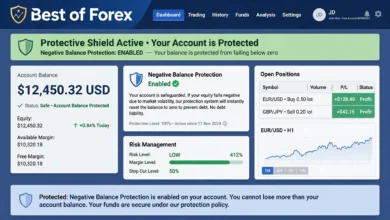
The FCA also caps leverage for retail clients and requires negative balance protection, meaning you can’t lose more than what’s in your account even in extreme market moves. This is a direct response to past incidents where highly leveraged retail accounts blew past zero during sudden volatility spikes.
Regular Audits and Transparency Requirements
Authorized brokers are subject to periodic reviews and have to meet ongoing disclosure requirements around fees, risk warnings, and how client orders are handled. This doesn’t remove all risk from trading, but it does mean there’s an outside party checking that the broker is operating the way it says it is.
How to Verify a Broker’s FCA Status Yourself
Don’t take a broker’s word for it. Every authorized firm has a unique Firm Reference Number (FRN), and you can look up any company directly on the Financial Conduct Authority’s official register. Here’s a simple way to check:
- Search the broker’s legal entity name, not just its brand name (many brokers trade under a different name than the entity that holds the license).
- Confirm the FRN listed on the broker’s website matches the one shown on the FCA register.
- Check what permissions the license actually covers, since some firms are only licensed to serve professional clients or offer limited services.
- Look at the “status” field to confirm the authorization is active and not under review or cancelled.
This takes about two minutes and it’s the single most reliable way to avoid a scam that’s borrowing the FCA’s name without the license to back it up.
Best FCA Regulated Forex Brokers in 2026
Below is an overview of well-established brokers that hold FCA authorization alongside licenses in other jurisdictions. Always confirm current licensing status directly on the FCA register before opening an account, since regulatory standing can change.
1. IG
IG is a London-headquartered broker and one of the longest-standing names in UK trading. It offers direct market access for experienced traders, letting them view order books for forex and equities rather than just trading against a dealing desk. Most account types at IG don’t require a minimum deposit, which makes it approachable for traders who want to start small.
2. Pepperstone
Pepperstone is recognized for tight spreads and fast execution, and it’s built a strong reputation among both beginners and more advanced traders looking for institutional-grade conditions. Its FCA-regulated UK entity operates under strict standards for client fund protection, and there’s no mandatory minimum deposit on its Standard or Razor account types.
3. FxPro
Headquartered in London, FxPro has been operating since 2006 and offers upward of 70 forex pairs. It’s known for a dependable trading platform and responsive customer support, both of which matter more than people expect once you’re actually trading live and something goes wrong at an inconvenient hour.
4. Capital.com
Capital.com is a newer entrant compared to some names on this list, founded in 2016, but it’s grown quickly and offers a wide range of forex pairs alongside a clean, modern trading interface. It’s a solid option for traders who want a straightforward platform without a steep learning curve.
5. FXCM
FXCM has been in the industry since 1999 and is regulated by the FCA in the UK alongside other reputable authorities. It’s built a name for strong compliance standards and a wide range of tradable instruments, which appeals to traders who want to diversify beyond just currency pairs.
6. Hantec Markets
Founded in 1990 and based in London, Hantec Markets is one of the more established brokers on this list, offering around 60 forex pairs. Its long operating history under FCA oversight is worth noting for traders who put weight on longevity as a sign of stability.
7. FXTM
FXTM, headquartered in Cyprus with FCA-regulated operations, offers around 60 forex pairs and has built a reputation for accessible account types aimed at both new and experienced traders. It’s often mentioned alongside other FCA regulated forex brokers for its educational resources as much as its trading conditions.
What to Look for Beyond the FCA License
Regulation is the starting point, not the whole picture. Once you’ve confirmed a broker is genuinely licensed, these factors will shape your actual day-to-day trading experience.
Trading Costs and Spreads
Spreads vary by account type and by the currency pair you’re trading. A broker might advertise near-zero spreads on major pairs like EUR/USD but charge considerably more on less liquid pairs or during volatile news events. Always check the full fee schedule, including overnight financing charges, rather than just the headline spread number.
Platform and Tools
Most FCA regulated forex brokers support MetaTrader 4 or MetaTrader 5, and many now offer proprietary platforms as well. Consider what actually matters for your trading style: charting tools, one-click execution, mobile app reliability, or access to automated trading through Expert Advisors.
Account Minimums and Leverage
The FCA caps leverage for retail clients, typically at 1:30 for major currency pairs, which is far lower than what offshore brokers advertise. This isn’t a downside so much as a built-in guardrail. If you see a UK-facing broker advertising leverage far above FCA limits, that’s a red flag worth investigating.
Customer Support Quality
Read recent, independent reviews rather than testimonials on the broker’s own site. Look specifically for how the broker handles withdrawal requests and dispute resolution, since that’s where the difference between a good and a mediocre broker tends to show up.
Range of Tradable Instruments
Even if you’re focused on forex, having access to indices, commodities, or shares under the same account can be useful as your trading strategy develops. Check whether the broker offers the specific pairs and asset classes you actually plan to trade rather than being swayed by a large total count.
Common Mistakes Traders Make When Choosing a Broker
- Assuming any mention of “regulation” is equivalent. An offshore license and an FCA license are not interchangeable in terms of protection.
- Chasing bonuses over broker quality. Deposit bonuses often come with restrictive withdrawal conditions attached.
- Ignoring the fine print on leverage and margin calls. Understanding how margin works before you trade live can prevent painful surprises.
- Not testing the platform with a demo account first. Every broker on this list, and most reputable ones generally, offer demo accounts, and it’s worth using one before committing real funds.
- Overlooking withdrawal speed and fees. A broker can look great until you try to get your own money back out.
Frequently Asked Questions
Is FCA regulation better than other regulators? Many traders and industry commentators consider the FCA one of the top-tier regulators globally, alongside bodies like ASIC in Australia, because of its strict capital requirements and client protection rules. That said, “better” depends partly on where you live and which protections apply to you as a client.
Can I lose more money than I deposit with an FCA regulated broker? No, not for retail accounts. Negative balance protection is a mandatory requirement for firms serving retail clients under FCA rules.
Do FCA regulated brokers charge higher fees? Not necessarily. Regulatory compliance costs can factor into pricing, but competition among FCA regulated forex brokers keeps spreads and commissions competitive with brokers in less regulated jurisdictions.
What happens if my FCA regulated broker goes bankrupt? Your funds should be held in segregated accounts separate from company assets, and eligible clients can claim compensation through the FSCS up to £85,000.
Conclusion
Picking a broker based on regulation first and marketing second is one of the simplest ways to protect yourself in an industry where trust is genuinely hard to verify from the outside. FCA regulated forex brokers operate under some of the strictest capital, transparency, and client protection requirements in the world, covering everything from segregated funds and negative balance protection to compensation if a firm fails. Names like IG, Pepperstone, FxPro, Capital.com, FXCM, Hantec Markets, and FXTM all hold current FCA authorization, but licensing status can change, so always verify a broker’s Firm Reference Number directly on the FCA register before opening an account.
Beyond the license itself, take time to compare spreads, platform tools, leverage limits, and customer support quality, since those are the details that will actually shape your day-to-day trading experience. Forex trading carries real risk regardless of who regulates your broker, so treat this guide as a starting point for due diligence rather than a substitute for your own research.