Best Forex Brokers with Cent Accounts for New Traders
Compare the best forex brokers with cent accounts for new traders, including deposits, spreads, and platforms, before you open your first live account.

Starting out in forex trading with real money can feel like a big leap, especially when your first few trades are guaranteed to include mistakes. This is exactly why forex brokers with cent accounts have become such a popular entry point for beginners.
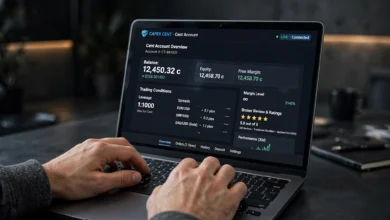
A cent account lets you trade with real market conditions and real execution, but your balance is shown in cents instead of dollars, which shrinks your financial exposure to a fraction of what a standard account would risk. Instead of practicing on a demo account that never quite feels real, or jumping straight into a standard account and risking money you can’t afford to lose, a cent account gives you a middle ground where the stakes are low but the lessons are genuine.
In this guide, we’ll walk through what a cent account actually is, why it matters for new traders, and what separates a good cent account broker from a mediocre one. We’ll also look at the brokers that consistently show up in independent comparisons for their cent account offerings, along with the account features, minimum deposits, and platforms worth checking before you sign up. Whether you’re testing a new strategy, learning how spreads and slippage behave in live markets, or simply building confidence before scaling up, this article should help you figure out where to start.
What Is a Cent Account and Why It Matters for Beginners
A cent account is a type of forex trading account where your balance and trade values are denominated in cents rather than the standard currency unit. If you deposit $50, for example, your account balance would show as 5,000 cents. This isn’t a cosmetic difference. It changes the actual size of every position you open, which means your potential profit and potential loss on each trade are both scaled down by roughly a hundred times compared to a standard account with the same lot size.
For a new trader, this matters more than it might seem at first glance. Here’s why:
- Real market conditions, smaller risk. Unlike a demo account, a cent account uses live pricing, live execution, and live spreads. You’re not just clicking buttons in a simulation; you’re actually trading, just with much smaller amounts of money at stake.
- Room to make mistakes. Every trader makes bad calls when they’re starting out. A cent account lets those mistakes cost cents instead of dollars, which keeps the learning curve from becoming an expensive one.
- Emotional training. Trading with real money, even a small amount, triggers a different psychological response than trading on a demo. Fear, greed, and hesitation all show up differently once actual funds are involved, and a cent account is a low-cost way to get used to that pressure.
- Low minimum deposits. Many cent account brokers allow you to open an account with as little as $1 to $10, which removes the financial barrier that keeps a lot of beginners from getting started at all.
How Cent Accounts Differ From Standard and Demo Accounts
It helps to see the three account types side by side, since a lot of confusion comes from assuming a cent account is just a demo account with extra steps.
Cent Account vs. Demo Account
A demo account uses virtual money and, in many cases, slightly idealized execution that doesn’t fully reflect real-world conditions like slippage or requotes during volatile periods. A cent trading account, on the other hand, involves real deposits and real withdrawals, so the psychological and technical experience is much closer to what you’ll face once you move up to a standard account.
Cent Account vs. Standard Account
The trading mechanics on both account types are typically identical. You’ll have access to the same currency pairs, the same charting tools, and often the same trading platform. The difference is purely in the unit of account. A 0.01 lot trade on a cent account might be worth roughly 0.0001 standard lots in dollar terms, which is why losses and gains stay so small even during a string of losing trades.
Cent Account vs. Micro Account
Micro accounts are similar in spirit but usually denominate balances in the standard currency (say, USD) while allowing smaller lot sizes than a standard account. Cent accounts go a step further by converting the currency unit itself, which generally makes them the lowest-risk option of the three for someone with a very small starting deposit.


Key Features to Look for in a Cent Account Broker
Before picking a broker, it’s worth being deliberate about what actually matters for a beginner. Not every cent account is built the same way, and a few small differences in fees or execution can add up over time.
1. Regulation and Licensing
This is the single most important factor, arguably more important than spreads or bonuses. A broker’s regulatory status tells you whether your funds are held under any real oversight. Look for brokers regulated by recognized authorities such as the UK’s Financial Conduct Authority (FCA), Cyprus Securities and Exchange Commission (CySEC), or the Australian Securities and Investments Commission (ASIC). The U.S. Commodity Futures Trading Commission publishes useful guidance on how to check a broker’s registration status and spot red flags before depositing any money.
2. Minimum Deposit Requirements
Part of the appeal of forex cent accounts is the low barrier to entry. Many of the brokers worth considering allow you to open an account with $1 to $10, though some set the bar slightly higher, around $20 to $50. If you’re testing the waters, there’s rarely a good reason to pick a broker that requires a large minimum deposit for its cent account tier.
3. Spreads and Commission Structure
Because cent accounts involve such small trade sizes, spread costs can eat into your results faster than you’d expect on paper. Look for brokers advertising spreads starting around 0.1 to 0.5 pips on major pairs, and check whether commissions are charged separately or already built into the spread.
4. Available Trading Platforms
Most reputable cent account brokers support MetaTrader 4 (MT4) and MetaTrader 5 (MT5), which remain the industry standard for retail forex trading. A smaller number of brokers also offer proprietary platforms or mobile apps designed specifically for beginners. It’s worth checking whether the full feature set, including expert advisors and one-click trading, is actually available on the cent account tier, since some brokers restrict certain tools to standard accounts only.
5. Leverage Options
Leverage can range widely between brokers, sometimes as high as 1:1000 on cent accounts specifically, since the position sizes are so small anyway. High leverage isn’t automatically a good thing, but for a beginner learning position sizing and risk management, having flexibility on a small account can be useful as long as you understand what you’re doing.
6. Negative Balance Protection
This feature ensures your account balance can’t go below zero, even during extreme volatility or a market gap. It’s a standard safety net offered by most well-regulated brokers and worth confirming before you commit to a platform.
7. Withdrawal Process and Support
A broker can look great on paper, but slow withdrawals or unresponsive customer support will sour the experience quickly. Reading recent user reviews and checking withdrawal timelines, not just the marketing page, will save you a headache later.
Best Forex Brokers with Cent Accounts for New Traders
Below is an overview of brokers that consistently appear across independent broker comparisons for their cent account offerings. This is a general overview based on publicly available information; account terms, minimum deposits, and regulatory status can change, so always verify current details directly with the broker before opening an account.
1. Exness
Exness is frequently ranked among the top cent account forex brokers thanks to its combination of low minimum deposits (often as low as $1), spreads starting from around 0.3 pips, and multi-jurisdiction regulation that includes bodies like the FCA and CySEC. It supports both MT4 and MT5, and its acceptance of local payment methods across regions like Asia and Africa makes it accessible to a broad range of new traders.
2. RoboForex
RoboForex offers a “ProCent” account specifically designed for beginners and for traders testing new strategies with minimal financial exposure. It’s known for a low entry deposit, negative balance protection, and copy trading features that let newer traders observe or mirror more experienced traders’ positions while they build their own skills.
3. HFM (HotForex)
HFM is a well-established, beginner-friendly broker with a cent account that typically requires a minimum deposit of around $5. It offers strong regulatory coverage across multiple jurisdictions and a wide range of tradable instruments beyond just currency pairs, which can be useful once you’re ready to diversify.
4. FBS
FBS is a globally recognized broker regulated by CySEC and other authorities, offering a cent account with a minimum deposit as low as $1. It supports MT4, MT5, and its own mobile app, and it also offers Islamic accounts for traders who need to avoid overnight interest charges for religious reasons.
5. JustMarkets
JustMarkets puts a notable emphasis on risk control and trader education, which fits naturally with the purpose of a cent account. Its minimum deposit is typically around $1, and it supports both MT4 and MT5 with competitive spreads on major pairs.
6. Vantage Markets
Vantage stands out for offering a wide range of instruments, often cited at 90 or more, that are tradable through its cent account tier. It’s also known for solid educational resources aimed at beginners, though its full suite of platforms (such as certain proprietary tools) may not be available on the cent tier.
7. Alpari
Alpari has a long track record in the retail forex space and maintains a well-established cent account infrastructure. It’s often mentioned as a reliable alternative for traders who want an established brand name alongside the low-risk structure of a cent account.
Pros and Cons of Trading with a Cent Account
Like any account type, cent accounts come with real trade-offs. Understanding both sides will help you set realistic expectations before you start.
Advantages:
- Extremely low financial risk while still trading with real money
- Low or no minimum deposit requirements
- Genuine market conditions, including real spreads and execution speed
- A practical way to build risk management habits before scaling up
- Useful for testing new strategies without significant capital exposure
Drawbacks:
- A narrower selection of tradable instruments compared to standard accounts, often focused mostly on forex pairs
- Wider spreads on some brokers to compensate for the smaller transaction sizes
- The low stakes can encourage overtrading or careless habits that become costly once you move to a standard account
- Some trading platforms or tools may not be available on the cent account tier
- Profits, while proportionally meaningful, are small in absolute dollar terms, which can test patience
How to Choose the Right Cent Account Broker for You
There’s no single “best” broker for everyone, since your priorities as a new trader might differ from someone else’s. A few practical steps can help narrow things down:
- Confirm regulation first. Don’t skip this step even if a broker’s marketing looks polished. Check the regulator’s public register directly rather than trusting a badge on a website.
- Compare minimum deposits against your budget. If you’re starting with $20, there’s no reason to choose a broker requiring $100 for its cent account.
- Test the platform with a demo first. Most brokers let you try MT4 or MT5 in demo mode before committing real funds, even a small amount.
- Read recent, independent reviews. Look specifically for comments about withdrawal speed and customer support responsiveness, since these are the areas where problems tend to surface.
- Check instrument availability. If you eventually want to trade indices, metals, or crypto CFDs, confirm whether the cent account supports them or restricts you to forex pairs only.
- Understand the leverage on offer. Higher leverage isn’t inherently good or bad, but you should know exactly how it affects your position sizing before you place a trade.
Investopedia’s overview of how forex trading works is a solid starting point if you want to brush up on the mechanics of currency pairs, pip values, and leverage before opening any live account.
Common Mistakes New Traders Make with Cent Accounts
Even with reduced risk, it’s easy to develop bad habits on a cent account that carry over once you move to larger capital. A few worth watching out for:
- Treating it like a game. Because the dollar amounts are small, it’s tempting to ignore risk management altogether. The habits you build now, good or bad, tend to stick.
- Overtrading. Low stakes can encourage placing far more trades than a disciplined strategy would call for, simply because losses don’t sting.
- Ignoring position sizing rules. Just because you can open a large position relative to your tiny balance doesn’t mean you should skip learning proper lot sizing.
- Skipping a trading plan. A cent account is a good place to practice following a plan with entry rules, exit rules, and stop losses, not just experimenting randomly.
- Rushing to scale up. There’s no fixed timeline for moving to a standard account. Moving up before you’re consistently profitable on a cent account usually just transfers the same mistakes to higher stakes.
Conclusion
Cent accounts give new traders a genuinely useful way to step into live forex markets without risking money they can’t afford to lose. By trading with real spreads, real execution, and real emotional pressure, but on a scale measured in cents rather than dollars, beginners get a much more honest preparation for standard trading than a demo account can offer. Brokers like Exness, RoboForex, HFM, FBS, JustMarkets, Vantage Markets, and Alpari are regularly cited for combining low minimum deposits with solid regulation and reliable platforms, though it’s always worth confirming current terms directly with any broker before depositing funds.
The right choice ultimately depends on your budget, your preferred trading platform, and how much you value features like negative balance protection or a wide range of instruments. Take your time, verify regulation carefully, and treat your cent account as the training ground it’s meant to be before committing larger amounts of capital.