Best Forex Trading Courses Worth Paying For
Compare the best forex trading courses worth paying for in 2026, based on curriculum depth, mentorship, and real trading outcomes.
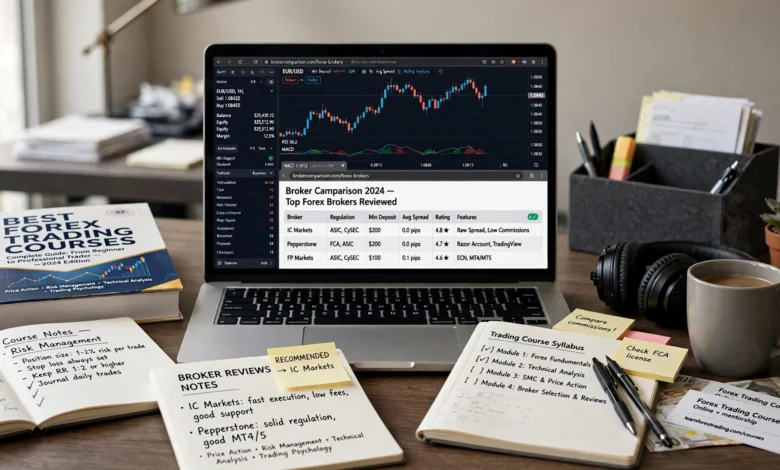
Best forex trading courses aren’t just video libraries with a certificate at the end. They’re structured paths that take you from confused beginner to someone who can read a chart, size a position, and walk away from a bad trade without panicking. That distinction matters because the forex market doesn’t punish ignorance gently. Between leverage, 24-hour price swings, and a constant stream of “guru” accounts promising overnight riches, most new traders lose money in their first year, often because they skipped structured education and jumped straight into live trading.
This is why the question “is it worth paying for a forex course” comes up so often. Free content from YouTube or forums can teach you vocabulary, but it rarely teaches you discipline, risk control, or how to build a repeatable process. Paid courses, when chosen carefully, fill that gap with structured lessons, mentorship, and accountability.
In this guide, we’ll walk through the courses that genuinely earn their price tag, what separates a serious program from a marketing funnel, and how to decide which one fits your goals, budget, and experience level. Whether you’re starting from zero or you’ve been trading for a year and want to tighten your strategy, there’s a course structure here that will fit.
What Makes a Forex Trading Course Worth Paying For
Not every paid course deserves your money. Before comparing specific programs, it helps to know what actually separates a good forex trading course from a glorified sales pitch.
1. A Clear, Sequential Curriculum
A strong course builds concepts in order: market structure, currency pairs, chart reading, technical analysis, risk management, and finally strategy execution. If a course jumps straight to “secret indicators” without covering the basics, that’s a warning sign.
2. Risk Management Front and Center
Any forex trading course worth its price treats risk management as core material, not an afterthought squeezed into one video. You should come away understanding position sizing, stop-loss placement, and how leverage can work against you just as fast as it works for you.
3. Practical, Hands-On Practice
Reading about candlestick patterns is not the same as marking them up on a live chart. Look for courses that include:
- Demo account exercises
- Chart-marking assignments
- Trade journaling templates
- Live or recorded trading sessions you can follow along with
4. Mentorship or Community Access
Courses that include mentorship, coaching calls, or an active trading community tend to produce better outcomes than pre-recorded videos alone. Having someone to ask “why did this trade fail” makes a real difference in how fast you improve.
5. Transparent Track Record
Be cautious of instructors who show only cherry-picked winning trades. A credible educator will discuss losses, drawdowns, and the emotional side of trading, not just highlight reels.

Best Forex Trading Courses Worth Paying For
Here’s a breakdown of the programs and platforms that consistently show up as strong, credible choices for traders serious about learning the craft.
1. Asia Forex Mentor – One Core Program
The One Core Program is built around institutional-style trading, with a heavy focus on price action, trade planning, and risk management rather than indicator-based signals. It’s aimed at traders who already have basic market knowledge and want a professional-grade framework rather than a beginner primer.
Best for: Intermediate traders who want a structured, no-fluff approach built on how professional trading desks actually operate.
What stands out:
- Strong emphasis on trade planning and psychology, not just chart patterns
- Mentorship access rather than pure video content
- A curriculum designed around long-term consistency instead of quick wins
2. Trading Education by Thomas Kralow
This program takes a broader approach, covering forex, stocks, and crypto under one structured curriculum. It’s designed for learners who want a complete trading education rather than a forex-only deep dive, with lessons that build progressively from fundamentals to advanced strategy.
Best for: Beginners who want one structured path covering multiple markets, not just currency pairs.
What stands out:
- Step-by-step structure that suits people new to trading altogether
- Covers trading psychology and habit-building alongside technical skills
- Works well for learners who prefer a defined syllabus over scattered free content
3. ForexSignals.com
ForexSignals.com blends education with live trading signals and mentorship, giving members a way to see strategies applied in real time rather than only in theory. The community and coaching angle is a major part of the value here.
Best for: Traders who learn best by watching live analysis and want ongoing support after the initial course content.
What stands out:
- Live trading rooms where instructors explain decisions as they happen
- Active community for accountability and questions
- Signals can double as a learning tool when paired with the educational material
4. BabyPips School of Pipsology
BabyPips remains one of the most respected free forex education resources online, and it’s worth mentioning here because many paid courses assume you already know what BabyPips teaches for free: pips, lots, leverage, and basic chart reading. Its premium community features and more advanced content make the step from free to paid worthwhile for traders who want structure without a big financial commitment.
Best for: Absolute beginners who want a no-cost foundation before investing in a premium forex trading course.
What stands out:
- Genuinely beginner-friendly, gamified lesson structure
- Strong glossary and reference material for terminology
- A logical bridge into paid mentorship programs once fundamentals are covered
5. Corporate Finance Institute (CFI) – Capital Markets & Securities Courses
CFI takes a more academic, finance-industry approach to forex education. Its trading and capital markets courses cover currency conventions, trade mechanics, and spot FX in a way that’s closer to what you’d find in a finance degree program than a retail trading course.
Best for: Career-focused learners who want a credential to add to a resume alongside practical trading knowledge.
What stands out:
- Official certificates that carry weight in finance-adjacent careers
- Structured, professional presentation of trading mechanics
- Useful for people who want to work in trading, banking, or asset management, not just trade personally
6. Interactive Brokers – Traders’ Academy
Interactive Brokers built one of the more comprehensive free educational offerings in the brokerage industry, and its Traders’ Academy now includes IBKR Campus and a structured, university-style syllabus for traders who want a formal learning path. While historically stronger on equities and options, it has expanded coverage of macroeconomic themes and monetary policy that apply directly to currency trading.
Best for: Traders who already have a brokerage account and want education tied directly to the platform they’re using.
What stands out:
- Free access with genuinely deep content, unusual for a broker-run academy
- Coverage of macroeconomic and fundamental analysis relevant to forex
- A mobile-first companion app for traders who prefer learning on the go
7. Coursera Forex Specializations
Coursera hosts several university-affiliated forex and financial trading courses that cover currency trading strategies, technical analysis, and risk management within a broader finance curriculum. These tend to run three to six months for full specializations, or a few weeks for standalone courses.
Best for: Learners who want academic rigor, structured deadlines, and a certificate from a recognized institution.
What stands out:
- University-level instruction with structured modules
- Flexible pacing, from short courses to multi-month specializations
- Good complement to hands-on trading education rather than a replacement for it
Free vs. Paid Forex Courses: Is Paying Worth It?
This is the question most beginners actually want answered, so let’s be direct about it.
Free resources are genuinely useful for:
- Learning terminology and market basics
- Understanding how currency pairs and pips work
- Getting comfortable with a demo trading platform
Paid courses earn their cost when they provide:
- A structured curriculum that removes the guesswork of “what do I learn next”
- Mentorship or feedback on your actual trades
- Community accountability, which keeps most people from quitting after a rough month
- Advanced strategy content that free resources rarely cover in depth
A reasonable approach is to start with free material like BabyPips to build vocabulary and confidence, then invest in a paid forex trading course once you understand the basics and want structured mentorship to sharpen your strategy. According to Investopedia’s overview of the forex market, currency trading is one of the largest and most liquid markets in the world, which also means competition for consistent profits is intense. Education is one of the few edges a retail trader can actually control.
How to Choose the Right Forex Trading Course
With dozens of options claiming to be the “best,” use these criteria to filter your choice.
Match the Course to Your Experience Level
- Complete beginner: Start with free foundational material, then move to a structured beginner program with mentorship.
- Some experience, inconsistent results: Look for courses focused on risk management and psychology, not just new strategies.
- Experienced but plateaued: Consider institutional-style programs focused on price action and professional trade planning.
Check for Realistic Marketing
Be skeptical of any course promising guaranteed profits, specific monthly returns, or “secret” strategies that no professional trader uses. Forex trading, like any speculative market, carries real risk of loss. The U.S. Commodity Futures Trading Commission’s retail forex guidance is a useful reminder that leverage and volatility can work against you just as easily as for you, and no course can eliminate that risk entirely.
Look at the Support Structure
Ask yourself:
- Does the course include direct access to instructors or mentors?
- Is there a community of other students for accountability?
- Are there office hours, live sessions, or a way to ask questions?
- Does the program update its content as market conditions change?
Consider the Total Cost Against Your Trading Capital
If a course costs more than a reasonable percentage of the capital you plan to trade with, it may not make financial sense yet. It’s usually smarter to build capital with a smaller, well-reviewed course first, then upgrade to a premium mentorship program once you’ve proven some consistency on a demo or small live account.
Common Mistakes to Avoid When Picking a Course
- Chasing “guru” hype instead of curriculum quality. Flashy lifestyle marketing often signals weak educational substance underneath.
- Ignoring risk management content. If a course spends more time on entry signals than on protecting your capital, that’s a red flag.
- Skipping the free foundation. Jumping into an expensive advanced course without understanding basic terminology wastes both time and money.
- Assuming one course is enough. Even experienced traders continue learning through books, mentorship, and updated market analysis.
- Not practicing on a demo account first. No course, however good, replaces the muscle memory built from actually placing and managing trades.
Frequently Asked Questions
Are paid forex trading courses actually worth the money?
Yes, when the course offers structured curriculum, mentorship, and practical exercises rather than just recorded lectures. The value comes from accelerated learning and accountability, not from any guarantee of profit.
How much should I expect to pay for a good forex course?
Prices vary widely, from under $100 for structured online programs to several thousand dollars for premium mentorship packages. Price alone isn’t a reliable indicator of quality, so compare curriculum depth and support structure rather than cost.
Can I learn forex trading for free?
Yes, to a point. Free resources like BabyPips can teach you the fundamentals well. Most traders eventually invest in paid education once they want structured mentorship, live trading practice, or advanced strategy training.
How long does it take to complete a forex trading course?
This depends on the format. Standalone courses can take a few weeks, while full specializations or mentorship programs often run three to six months, especially when they include ongoing coaching.
What’s the biggest mistake new traders make after finishing a course?
Trading with real money before testing a strategy thoroughly on a demo account. Course knowledge needs to be paired with disciplined practice before it translates into consistent results.
Conclusion
Choosing among the best forex trading courses comes down to matching the program’s structure, mentorship, and depth to where you actually are as a trader, not to whichever course has the loudest marketing.Whatever you choose, prioritize risk management, realistic marketing, and hands-on practice over promises of quick profits, since no course can remove the genuine risk that comes with trading currency markets.
Free resources like BabyPips are a smart starting point for building vocabulary and confidence, while paid programs such as Asia Forex Mentor’s One Core Program, Trading Education by Thomas Kralow, ForexSignals.com, CFI’s capital markets courses, Interactive Brokers’ Traders’ Academy, and Coursera’s forex specializations each serve different goals, from career credentials to live mentorship to institutional-style strategy.