Best Forex Trading Strategies That Still Work in 2026
Forex trading strategies that still perform in 2026, covering trend following, price action, breakouts, and risk control that actually works.
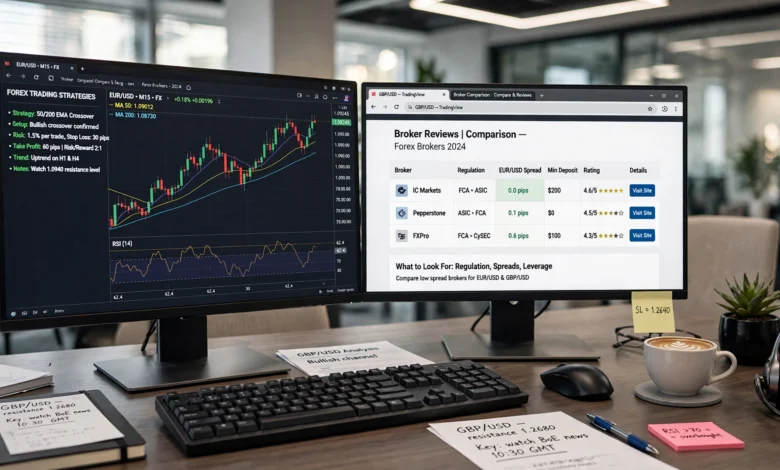
The forex market doesn’t sit still, and neither does what actually works in it. Every year a new batch of indicators, bots, and “secret systems” get sold to traders looking for an edge, and every year most of them quietly disappear. What’s left standing are a handful of approaches that have survived changing volatility, tighter spreads, and a market now dominated by algorithmic order flow. If you’re trying to figure out which forex trading strategies are worth your time in 2026, this guide walks through ten of them, why they still hold up, and where each one tends to fall apart.
This isn’t a list built around hype. Central banks are moving interest rates in ways that create real divergence between currency pairs, institutional algorithms are shaping how price reacts around key levels, and retail traders have more access to real-time data than ever before. That combination has actually made some older, simpler methods more reliable, not less, because they’re built on how price and liquidity behave rather than on a specific market regime that eventually changes. At the same time, a few newer approaches, particularly around smart money concepts and AI-assisted filtering, have earned a real place in a trader’s toolkit rather than staying a fad.
Below, we’ll go through trend following, price action trading, breakout strategies, scalping, swing trading, smart money concepts, carry trades, news trading, range trading, and risk management, the backbone of everything else on this list. Each section covers what the strategy actually involves, when it works best, and what tends to trip traders up.
1. Trend Following: Still the Backbone of Forex Trading Strategies
Trend following remains one of the most durable forex trading strategies because it doesn’t try to predict anything. Instead of guessing where price will turn, you identify the direction the market is already moving in and trade in that direction until there’s clear evidence it’s changing.
How trend following works in practice
Traders typically use a combination of moving averages (like the 50 and 200 EMA), the ADX indicator to confirm trend strength, and higher timeframe structure to decide whether a pair is trending or chopping sideways. The entry itself is usually simple:
- Wait for price to pull back toward a moving average or a prior support/resistance zone
- Confirm momentum is still aligned with the broader trend
- Enter with a stop placed beyond the recent swing point
- Trail the stop as the trend extends
Why it still works in 2026
Institutional algorithms tend to create longer, cleaner directional moves once a trend is established, because large positions get built up over time rather than in a single burst. That plays directly into the hands of trend followers who don’t need a perfect entry, just a correct read on direction.
Where it breaks down
Trend following struggles in choppy, range-bound markets, which is exactly why it should never be the only tool in your kit. During low-volatility periods or ahead of major central bank announcements, trend signals get noisy fast, and this is where a lot of traders give back gains from a good trending month.
2. Price Action Trading: Reading the Chart Without the Clutter
Price action trading strips away most indicators and focuses purely on candlestick behavior, support and resistance, and market structure. It’s not a beginner shortcut, it actually takes real screen time to get good at, but once it clicks, it becomes one of the more adaptable forex trading strategies available.
Core price action concepts
- Support and resistance zones, not exact lines, where price has reacted repeatedly
- Candlestick patterns like pin bars, engulfing candles, and inside bars that signal rejection or continuation
- Market structure, meaning a sequence of higher highs and higher lows (uptrend) or the reverse (downtrend)
- Breaks of structure, which often signal a shift in momentum before most indicators catch up
Price action works across every timeframe and every pair, which is part of why it’s held up so well. It doesn’t depend on a specific volatility environment or interest rate cycle. The tradeoff is that it’s more subjective than a rules-based system, so two traders looking at the same chart can reasonably disagree on what they’re seeing.

3. Smart Money Concepts (SMC): Trading Alongside Institutions
Smart money concepts, often called ICT trading, has moved from a niche corner of trading forums into one of the more widely used forex trading strategies among active retail traders. The core idea is straightforward: instead of reacting to price after the fact, you try to identify where large institutions are likely building or exiting positions.
Key SMC tools
- Order blocks – zones where institutional buying or selling is believed to have originated
- Fair value gaps – imbalances in price that the market often revisits
- Liquidity grabs – sharp moves designed to trigger retail stop-losses before reversing
- Inducement – price action meant to lure traders into the wrong side of a move before the real move begins
SMC has real value because liquidity genuinely does concentrate around round numbers, prior highs and lows, and clustered stop-loss zones. The catch is that it’s easy to see order blocks and liquidity grabs everywhere in hindsight, which makes backtesting this strategy honestly harder than most others on this list. Traders who do well with SMC tend to combine it with basic market structure rather than trading it in isolation.
4. Breakout Trading: Catching the Move Before It Runs
Breakout trading looks for price to push through a well-defined level of support or resistance, ideally with volume or momentum to back it up, and enters in the direction of that break.
When breakouts work best
- Right before or after major economic data releases
- When price has been consolidating in a tight range for several sessions
- Around key psychological levels or long-standing support and resistance zones
The false breakout problem
The biggest weakness here is the false breakout, where price pokes through a level, triggers a wave of entries, then reverses hard. Experienced breakout traders manage this by waiting for a candle close beyond the level rather than reacting to the first touch, and by combining breakouts with momentum confirmation from something like RSI or a stochastic oscillator.
5. Scalping: Small Gains, High Frequency
Scalping is the fastest of the forex trading strategies covered here, with trades often lasting anywhere from a few seconds to a few minutes. Scalpers work primarily on the 1-minute and 5-minute charts, aiming to collect small, repeatable gains throughout a session.
Scalping demands tight spreads, fast execution, and genuine discipline, since a single distracted moment can turn a small planned loss into a much bigger one. It suits traders who enjoy constant decision-making and can handle screen time without it wearing them down. It’s generally not a good fit for beginners, not because it’s inherently more complex, but because the speed leaves very little room to think through mistakes before they compound.
6. Swing Trading: A Middle Ground That Fits Real Life
Swing trading holds positions for several days to a few weeks, aiming to capture a broader move without needing to watch every candle. It combines elements of trend following and price action, using higher timeframe charts (4-hour and daily) to time entries around pullbacks or structure breaks.
This is often the best starting point for traders who have a job, school, or anything else competing for their attention, because it doesn’t require constant monitoring. The tradeoff is overnight and weekend risk, since positions stay open through news events and market closures that can gap price in either direction.
7. Carry Trade: Profiting From Interest Rate Differences
The carry trade strategy involves buying a currency with a higher interest rate while selling one with a lower rate, aiming to earn the difference (the “carry”) on top of any price appreciation. Pairs like NZD/JPY and AUD/JPY have historically been popular choices because of the interest rate gap between those economies.
What makes carry trades work
- A meaningful and stable interest rate differential between the two currencies
- Low volatility, since sudden moves can wipe out months of accumulated carry in a single session
- Central bank policy that isn’t expected to shift abruptly
Carry trades can look deceptively steady for long stretches and then unwind violently when risk sentiment shifts, something traders saw repeatedly during past periods of market stress. Keeping an eye on central bank commentary and broader risk appetite matters more here than in almost any other strategy on this list.
8. News Trading: Positioning Around Volatility
News trading targets the sharp, fast moves that follow high-impact economic releases like interest rate decisions, employment data, and inflation reports. Because algorithmic trading now reacts to headlines within milliseconds, retail news traders generally do better positioning around the reaction and follow-through rather than trying to beat the initial spike.
Spreads tend to widen dramatically in the seconds around major releases, and slippage can be significant, so this strategy rewards traders who understand order execution mechanics, not just the calendar. It’s a strategy best approached with smaller position sizes and a clear plan for both directions of the outcome.
9. Range Trading: Working Sideways Markets
Not every pair trends all the time, and range trading exists for exactly those stretches. This approach identifies a clear ceiling (resistance) and floor (support) and trades the bounces between them, buying near support and selling near resistance until the range breaks.
Range trading pairs well with oscillators like RSI or stochastic, which help confirm overbought and oversold conditions within the range. It works best on pairs with lower volatility and during quieter market sessions, such as the Asian session, when clean, repeatable technical setups tend to show up more often than during the London or New York overlap.
10. Risk Management: The Strategy Behind Every Strategy
None of the forex trading strategies above matter much without solid risk management. This is the part that separates traders who last years from those who blow through an account in a few volatile weeks.
Core risk management rules worth following
- Risk a small, fixed percentage of your account per trade, commonly 1-2%
- Always use a stop-loss, and decide on it before entering, not after
- Aim for a reasonable risk-to-reward ratio, generally at least 1:2
- Avoid stacking correlated trades that all lose together if one currency moves against you
- Keep a trading journal so mistakes get corrected instead of repeated
Risk management is also where discipline actually gets tested. A strategy with a 55% win rate and strict risk control will consistently outperform a flashier system with a 70% win rate and no consequences for oversized losses. According to the Bank for International Settlements, daily turnover in global foreign exchange markets has continued climbing into the trillions, which underscores just how much liquidity and competition traders are up against, and why disciplined risk control matters more as the market gets more crowded, as detailed in the BIS’s triennial survey of FX market turnover.
How to Choose the Right Forex Trading Strategy for You
With ten legitimate options on the table, picking one comes down to a few honest questions rather than chasing whatever performed best last month.
- How much time can you actually give it? Scalping demands constant attention, while swing trading and carry trades fit better around a full schedule.
- What’s your tolerance for drawdown? Breakout and news trading can produce sharper swings than range or trend strategies.
- Do you prefer rules or judgment? Trend following and range trading are more mechanical, while price action and smart money concepts require more discretionary reading of the chart.
- Can you backtest it properly? Some strategies, particularly SMC, are harder to validate objectively, so be honest with yourself about whether you’re seeing a real edge or just a pattern in hindsight.
Many experienced traders don’t stick to just one approach. It’s common to combine trend following for the bigger picture with price action for entries, or to use range trading during quiet weeks and switch to breakout setups once volatility picks up. For a solid grounding in how the underlying market functions before layering on any of these approaches, Investopedia’s overview of how the forex market works is a useful starting reference.
Common Mistakes That Undermine Good Strategies
Even a well-chosen strategy fails if it’s applied carelessly. A few patterns show up again and again:
- Switching strategies too often after a losing streak instead of sticking with a tested plan
- Oversized position sizing that turns normal drawdowns into account-threatening losses
- Ignoring the broader trend while trading a strategy designed for ranging markets, or vice versa
- Trading through major news events without adjusting position size or stop distance
- Skipping the journal, which makes it nearly impossible to tell whether a losing stretch is bad luck or a flawed process
Conclusion
The forex trading strategies that hold up in 2026 aren’t exotic secrets, they’re the same core approaches traders have relied on for years: trend following, price action, breakouts, scalping, swing trading, smart money concepts, carry trades, news trading, and range trading, all held together by disciplined risk management.
What’s changed is the environment they operate in, with faster algorithmic reactions, deeper liquidity data, and central bank policy shifts that reward traders who adapt their execution rather than their entire philosophy. Pick the strategy that actually fits your schedule, temperament, and risk tolerance, test it properly before committing real capital, and treat risk management as the non-negotiable foundation underneath whichever method you choose.