Best Forex Risk Management Tools for 2026
Forex risk management tools for 2026 explained: stop-loss automation, position sizing calculators, and platforms that protect your capital.
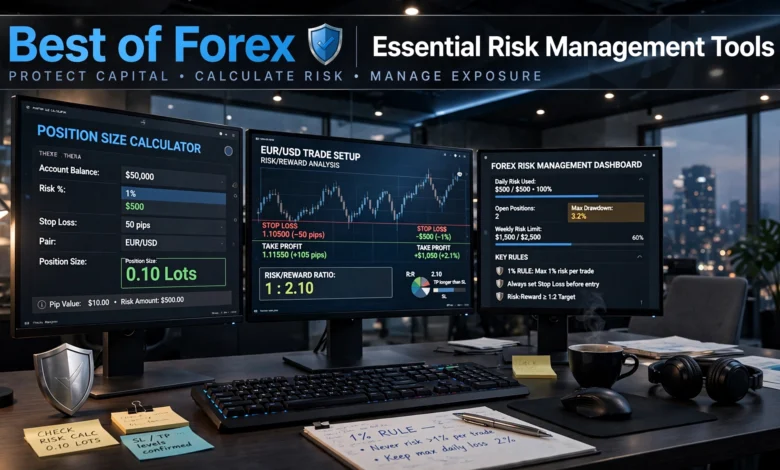
Forex risk management tools have become the difference between traders who last and traders who blow up their accounts within a few months. The forex market moves fast, leverage amplifies both gains and losses, and a single unhedged position can wipe out weeks of careful gains in minutes.
That’s why more traders, from beginners to full-time professionals, are building their strategies around software and systems designed specifically to control downside risk rather than chase upside reward.Heading into 2026, the tools available have gotten smarter.Many now use real-time volatility data, automated position sizing, and correlation tracking that used to require a spreadsheet and a lot of patience.
But more options also means more confusion about what actually works. In this article, we’ll walk through the categories of forex risk management tools worth knowing, the specific platforms and calculators that stand out this year, and the practical habits that separate traders who protect their capital from those who don’t. Whether you’re trading part-time on a retail platform or managing a larger account, the goal is the same: know your risk before you take the trade, not after.
Why Forex Risk Management Tools Matter More Than Ever in 2026
Currency markets in 2026 are dealing with more volatility triggers than they used to. Central bank policy shifts, geopolitical tension, and algorithmic trading volume all move prices faster than a human can react manually. That’s the core reason forex risk management has shifted from a “nice to have” skill to a required part of any serious trading plan.
A few reasons this matters right now:
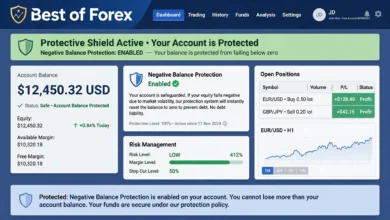
- Leverage is still widely available, and it cuts both ways. A tool that automatically caps your exposure per trade protects you from a string of losses turning into an account-ending event.
- Retail trading volume has grown, which means spreads and slippage can behave differently during high-volume news events. Risk tools that account for volatility help you avoid getting caught off guard.
- Automated and algorithmic trading now represents a large share of daily forex volume, according to industry data cited by Investopedia’s overview of risk management, which means retail traders are competing against systems that never skip a stop-loss.
- Regulatory bodies continue to flag the risks tied to leveraged forex trading for retail participants, a point reinforced in guidance from the Commodity Futures Trading Commission, which oversees forex trading rules in the U.S.
None of this means forex trading is unmanageable. It means the traders who succeed are the ones using structured tools instead of gut instinct.
Types of Forex Risk Management Tools You Should Know
Before picking a specific tool, it helps to understand the categories they fall into. Most forex risk management software in 2026 fits into one of five buckets.
Stop-Loss and Take-Profit Automation Tools
These are the most basic and most essential forex risk management tools. They let you set an exit point before you ever place a trade, removing the emotional decision-making that happens once you’re already in a position and watching it move against you. Most modern platforms allow:
- Fixed stop-loss and take-profit orders
- Trailing stops that adjust as a trade moves in your favor
- Guaranteed stop-loss orders (offered by some brokers for an added cost, which protect against slippage during volatile moves)
Position Sizing Calculators
Position sizing is arguably the most underrated part of risk management in forex. A position sizing calculator tells you exactly how many lots to trade based on your account size, your risk tolerance per trade, and your stop-loss distance in pips. This removes the guesswork and keeps every trade proportional to your account, regardless of how confident you feel about the setup.


Risk Management Trading Platforms and Expert Advisors (EAs)
Some traders use dedicated software or Expert Advisors built for MetaTrader 4/5 that automatically manage risk across multiple open trades. These tools can:
- Close all positions if daily losses hit a set threshold
- Automatically adjust lot sizes based on account equity
- Flag overleveraged accounts before a trade is executed
Portfolio and Correlation Analysis Tools
If you trade more than one currency pair at a time, correlation matters. Two pairs that move in the same direction (like EUR/USD and GBP/USD) can double your effective risk without you realizing it. Correlation tools show you these relationships so you’re not accidentally doubling down on the same market exposure under different labels.
Volatility and Economic News Alert Tools
Sudden volatility around interest rate decisions, employment data, or geopolitical news is one of the fastest ways to get stopped out or slipped past your intended exit. Tools that track upcoming economic events and current volatility levels help traders either avoid trading through high-risk windows or adjust position size accordingly.
Best Forex Risk Management Tools for 2026
Here’s a breakdown of the tools and platforms that consistently come up as strong choices this year, based on functionality, reliability, and how widely they’re used across the trading community.
1. MetaTrader 5 Built-In Risk Management Features
MT5 remains one of the most widely used trading platforms, and its native tools (trailing stops, one-click trading with predefined risk, and account monitoring) are a solid starting point for most traders. It also supports custom EAs for more advanced automated risk control.
2. Myfxbook Risk Analyzer
Myfxbook’s free risk analysis tools let traders review historical trades, drawdown patterns, and exposure by currency pair. It’s particularly useful for spotting habits you might not notice on your own, like consistently oversizing trades during losing streaks.
3. Position Size Calculators (Babypips, FXTM, and similar)
Free online position sizing calculators are still some of the most practical forex risk management tools available. You input your account balance, risk percentage, and stop-loss in pips, and the calculator tells you the correct lot size instantly. Simple, but it removes a common source of human error.
4. Forex Correlation Matrix Tools
Correlation matrices, offered by several broker platforms and independent sites, visually show how currency pairs move relative to each other. This is especially useful for traders running multiple positions at once who want to avoid unintentional overexposure.
5. Economic Calendar and Volatility Alert Apps
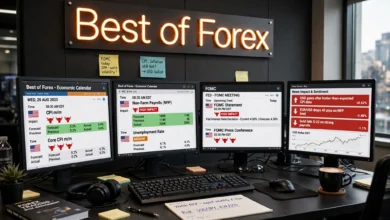
Apps like ForexFactory’s calendar or broker-integrated news alerts give traders a heads-up before high-impact news events. Pairing this with a rule like “no new trades 30 minutes before major data releases” is a simple but effective risk control.
6. Automated Risk Management EAs
For traders on MT4/MT5, EAs designed specifically for risk control (rather than trade entry) can enforce daily loss limits, auto-adjust lot sizing, and close all trades if equity drops below a set percentage. These act as a safety net even when a trader is away from the screen.
7. Portfolio Margin and Exposure Dashboards
Larger accounts and prop firm traders increasingly rely on dashboards that show real-time margin usage, exposure by currency, and overall account risk in one view. These are especially valuable for traders juggling several open positions across different pairs.
How to Choose the Right Forex Risk Management Tool
Not every tool fits every trader. Here’s what to consider before adding one to your routine:
- Match the tool to your trading style. A scalper trading dozens of times a day needs fast, automated tools. A swing trader holding positions for days can rely more on manual calculators and periodic correlation checks.
- Check compatibility with your broker and platform. Some EAs and dashboards only work with specific platforms like MT4, MT5, or cTrader.
- Prioritize tools that integrate with your existing workflow. A great tool you never actually use because it’s clunky or separate from your platform won’t help you.
- Free doesn’t mean lesser. Many of the most effective risk management tools for forex traders (position size calculators, economic calendars) are free and widely trusted.
- Look for transparency in how the tool calculates risk. You should always understand the logic behind a stop-loss recommendation or lot size suggestion, not just trust a black box.
Common Mistakes Traders Make With Risk Management Tools
Even with good tools, traders undercut themselves in a few predictable ways:
- Setting a stop-loss and then moving it once the trade starts going against them, which defeats the entire purpose of the tool.
- Ignoring correlation between pairs, effectively doubling risk while believing they’re diversified.
- Not adjusting position size after a losing streak, which compounds drawdown instead of protecting the account.
- Overriding automated tools manually during emotional moments, particularly after a big win or loss.
- Failing to account for slippage during high-volatility news events, especially with tight stop-losses on fast-moving pairs.
Best Practices for Using Forex Risk Management Tools in 2026
To get real value out of any forex risk management tool, pair it with a few consistent habits:
- Risk a fixed percentage per trade (commonly 1-2%) regardless of how confident you feel about a setup.
- Review your trading history weekly using analytics tools to spot patterns in losses, not just wins.
- Set daily and weekly loss limits and let automated tools enforce them, rather than relying on willpower alone.
- Reassess your risk tools every few months. Markets change, and the volatility levels or correlations that held a year ago may not hold today.
- Combine tools rather than relying on just one. A position size calculator plus a correlation matrix plus a news alert app covers far more ground than any single tool on its own.
Conclusion
Forex risk management tools in 2026 give traders a real edge, not by predicting the market better, but by controlling how much damage a wrong call can do. From basic stop-loss automation and position sizing calculators to correlation matrices and automated EAs that enforce daily loss limits, the right combination of tools turns risk management from a vague good intention into an actual system in every single trade.
The traders who last in this market aren’t the ones who never lose. They’re the ones whose tools and habits keep every loss small enough to trade another day.