Best Forex Trading Tools for Serious Traders
Compare the best forex trading tools for serious traders, from charting platforms to risk calculators, for a sharper daily workflow.
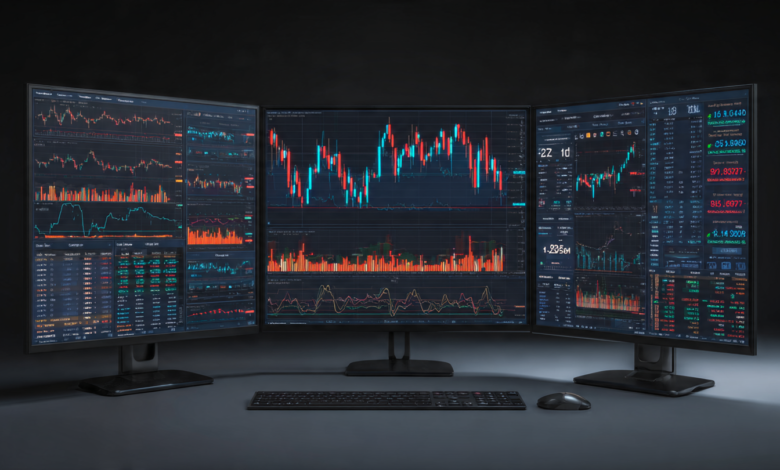
Forex trading tools are what separate traders who survive from traders who guess. Anyone can open a demo account and place a trade. Fewer people build a real workflow around charting software, risk calculators, economic calendars, and journaling systems that actually hold them accountable. If you’ve been trading for a while and you’re tired of relying on gut feeling, this article walks through the best forex trading tools worth adding to your setup, why each one matters, and how to pick the right combination for your own strategy.
The forex market moves trillions of dollars a day, and that scale creates both opportunity and noise. Price can swing on a single headline, a central bank comment, or a thin liquidity window overnight. Without the right forex trading tools, you’re reacting to that noise instead of trading with a plan. With the right ones, you’re working from data: clean charts, calculated position sizes, verified news, and a record of what actually worked in your last fifty trades.
This guide isn’t a sales pitch for one broker or one platform. It’s a practical breakdown of the tool categories serious traders actually use, the standout options in each category, and the questions you should ask before adding anything new to your workflow. By the end, you’ll have a clear picture of which forex trading tools deserve a spot on your desktop and which ones are just extra clutter.
What Makes a Forex Trading Tool Worth Your Time
Not every tool marketed to traders earns its place in a real workflow. Before adding anything, it helps to run it through a short mental checklist:
- Does it solve an actual problem you have, not a hypothetical one you read about online
- Is the data reliable and fast enough for how you trade, whether that’s scalping or swing trading
- Does it fit your broker and platform without forcing you to juggle three different logins
- Can you afford it long term, not just during a free trial period
- Does it make decisions clearer, or does it just add more numbers to stare at
A good rule of thumb: if a tool doesn’t change what you do next, it’s not helping you trade better. It’s just decoration. Keep that filter in mind as you go through the categories below, because the goal isn’t to collect the longest list of software. It’s to build a lean setup that supports how you actually trade.
Charting and Technical Analysis Tools
Charting software is the backbone of almost every trader’s routine. This is where you read price action, mark levels, and decide whether a setup is worth the risk.
TradingView
TradingView has become the default charting platform for a huge share of retail and professional traders, and for good reason. It runs in the browser, so there’s nothing to install, and it pairs clean, fast charts with a massive library of built-in indicators. Traders can also write custom scripts in Pine Script, which means you’re not limited to whatever indicators the platform ships with.
The social layer is what really sets TradingView apart from older charting software. Traders publish ideas, share custom indicators, and break down their own setups in public, which turns the platform into something closer to a community than a static tool. Traders who learn by watching others’ approaches often find that community genuinely useful for sharpening their own strategies. Even the free tier is usable for most retail strategies, though heavier users will eventually want a paid plan for more indicators per chart and faster data refresh.
MetaTrader 4 and MetaTrader 5
MetaTrader 4 (MT4) and its successor MetaTrader 5 (MT5) remain the most widely supported platforms among forex brokers worldwide. MT4 is still favored by many traders for its simplicity and the enormous library of custom indicators and Expert Advisors built over nearly two decades. MT5 adds more timeframes, a built-in economic calendar, and support for a wider range of asset classes beyond forex.

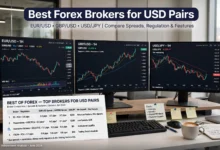
Industry reviewers consistently note that MetaTrader 4, MetaTrader 5, and cTrader remain at the core of most traders’ workflows, even as brokers now layer on automated trading bots and advanced analytics on top of them. If your broker supports both, MT5 is usually the better long-term pick unless you’re relying on a specific MT4-only indicator or bot.
cTrader
cTrader is a strong alternative for traders who want a more modern interface and faster order execution, particularly for scalping. It offers Level II pricing (depth of market), which shows you the order book rather than just the current bid and ask. That extra transparency matters if you’re trading during volatile news events and want to see where liquidity is actually sitting.
Trade Execution and Automation Tools
Charting tells you what’s happening. Execution tools decide how fast and how precisely you act on it.
Expert Advisors and Trading Bots
Automated strategies, often called Expert Advisors (EAs) on MetaTrader or bots on other platforms, let you codify a strategy so it runs without needing you to sit in front of a screen all day. This isn’t about “set it and forget it” get-rich schemes. Serious traders use automation to remove emotional decision-making from repetitive, rule-based strategies, like grid systems, breakout entries, or scheduled news-event trades.
Before trusting any automated strategy with real money, backtest it thoroughly against historical data and then run it on a demo account for at least a few weeks. A bot that looks great on a backtest can fall apart the moment real spread and slippage enter the picture.
Copy Trading Platforms
Copy trading tools let you mirror the trades of experienced traders in real time. Platforms built around this feature, sometimes bundled directly into a broker’s offering, are useful for newer traders who want exposure to a proven strategy while they build their own skills. The key is picking signal providers with a long, verifiable track record rather than a flashy short-term win streak. A few winning weeks means very little without a longer sample size behind it.
Risk Management Tools Every Serious Trader Needs
This is the category most beginners skip and most professionals treat as non-negotiable. Forex trading tools built for risk management don’t make you money directly, but they’re what keep one bad trade from wiping out weeks of gains.
Position Size Calculators
A position size calculator takes your account balance, risk tolerance, and stop-loss distance, and tells you exactly how many lots to trade. This sounds basic, but it’s one of the most commonly skipped steps by traders who lose their accounts. Risking a fixed percentage of your account per trade, rather than a fixed lot size, keeps your losses proportional as your balance changes.
Most brokers offer free calculators, including margin, pip, and profit calculators built directly into their trading tools suite, which is worth using every single time you open a new position, not just when a trade feels uncertain.
Economic Calendars
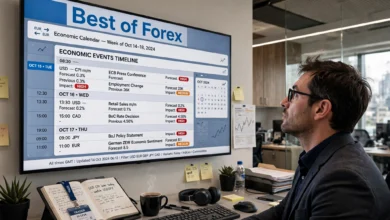
An economic calendar tracks scheduled data releases, interest rate decisions, and other events that tend to move currency pairs sharply. Serious traders check this daily, not just before entering a trade. Getting caught in a position during a surprise rate decision without knowing it was scheduled is one of the more avoidable mistakes in forex trading. For background on how these releases connect to currency valuation, Investopedia’s guide to forex trading is a solid starting point if you’re still building that foundation.
Market Research and Sentiment Tools
Price action tells you what’s happening, but sentiment and research tools tell you why, and sometimes what might happen next. Tools that track retail positioning, such as the percentage of traders long or short on a given pair, can offer a useful contrarian signal, since retail sentiment tends to cluster at extremes near reversals.
News aggregation tools that pull in verified headlines, rather than social media chatter, also matter more than people give them credit for. A single unconfirmed rumor can move a currency pair within seconds, and having a filtered, reliable news feed reduces the chance you react to something that turns out to be false. Several major brokers now integrate third-party research providers directly into their platforms, pairing real-time headlines with signal analysis so traders aren’t jumping between five different browser tabs mid-session.
Trade Journaling and Performance Tracking Tools
This is the tool category that quietly separates traders who improve from traders who repeat the same mistakes for years. A trading journal records every trade: entry, exit, position size, reasoning, and outcome. Over time, patterns emerge that are almost impossible to see in the moment, like a tendency to cut winners early or a specific setup that consistently underperforms despite feeling reliable.
Some traders use dedicated journaling software with built-in analytics, while others keep it simple with a well-organized spreadsheet. What matters more than the tool itself is consistency. A journal you update sporadically won’t reveal much. A journal you update after every single trade, including the losses you’d rather forget, becomes one of the most valuable forex trading tools in your entire setup.
Key data points worth tracking in every journal entry:
- Entry and exit price, plus the reason for each
- Position size and percentage of account risked
- Emotional state before and after the trade
- Whether the setup matched your written trading plan
- Screenshot of the chart at entry, for later review
VPS Hosting for Forex Trading Tools
If you rely on automated strategies or Expert Advisors, a Virtual Private Server (VPS) keeps your trades running even when your personal computer is off or your internet connection drops. A VPS hosts your trading platform on a remote server with a stable connection, which matters most for strategies that depend on precise timing, like scalping or news-event trading, where even a few seconds of downtime can mean a missed entry or an open position left unmanaged. Several brokers now bundle free VPS hosting into their forex trading tools package for active account holders, which is worth checking before paying for a separate service.
How to Choose the Right Forex Trading Tools for Your Strategy
There’s no single “best” stack of forex trading tools, because the right combination depends heavily on how you trade. A few practical guidelines:
- Day traders and scalpers should prioritize fast charting, Level II pricing through something like cTrader, and a reliable VPS.
- Swing traders get more value from a strong economic calendar, sentiment tools, and a detailed trade journal, since they’re holding positions across multiple news cycles.
- Beginners should start with a simple, well-supported platform such as MT4, a position size calculator, and a journal, before layering on automation or paid research subscriptions.
- Algorithmic traders need robust backtesting environments and a dependable VPS more than they need extra charting indicators.
It’s also worth checking regulatory standing before committing to any broker’s proprietary tools. A platform can look polished and still be attached to a broker operating outside proper oversight, so verifying registration through a body like the National Futures Association is a reasonable habit before funding a live account.
Common Mistakes Traders Make With Their Tools
- Overloading charts with indicators until the actual price action gets lost behind a wall of lines
- Paying for premium research subscriptions without ever reviewing whether the signals actually improve results
- Skipping the journal during losing streaks, which is exactly when the data matters most
- Ignoring the economic calendar and getting blindsided by scheduled volatility
- Switching platforms too often, which resets the learning curve every time instead of building deep familiarity with one system
Conclusion
The right forex trading tools won’t guarantee profits, but they remove a lot of the guesswork that trips up traders who rely on instinct alone. A solid setup usually combines reliable charting software like TradingView or MetaTrader, a disciplined risk management routine built around position size calculators and economic calendars, sentiment and research tools that keep you informed without drowning you in noise, and a trade journal you actually maintain.
Add automation and VPS hosting once your strategy is proven, not before. Serious traders don’t chase every new piece of software that shows up in their feed. They build a lean, dependable stack, learn it thoroughly, and let the data guide the next decision instead of emotion.