Best Low Spread Forex Brokers This Year
Best low spread forex brokers compared by real trading costs, regulation, and execution quality to help you trade smarter this year.

Best low spread forex brokers are the ones that quietly save you the most money without you ever noticing, because the savings show up one trade at a time. If you’ve ever watched a winning trade turn into a break-even one after the spread and commission got taken out, you already know why this matters. Spread is the gap between the buy and sell price on a currency pair, and it’s the cost you pay every single time you open a position, win or lose.
For casual traders placing a handful of trades a month, a wide spread is an annoyance. For scalpers, day traders, and anyone running an automated strategy, it’s the difference between a profitable system and one that bleeds out slowly. A trader placing 20 round-turn trades a day on EUR/USD can pay hundreds of dollars more per month simply by picking a broker with average spreads instead of tight ones.
This guide looks at the best low spread forex brokers available right now, based on real average spreads on major pairs, commission structures, regulatory standing, and execution speed rather than marketing claims. We’ll also cover how spreads actually work, what “zero spread” really means, and the other costs that can quietly cancel out a great spread. By the end, you’ll know exactly what to look for and which brokers are worth opening a demo account with first.
What Makes a Forex Broker “Low Spread”?
A low spread forex broker is one that consistently offers a small gap between the bid and ask price on currency pairs, particularly on majors like EUR/USD, GBP/USD, and USD/JPY. Industry-wide, an average EUR/USD spread sits somewhere around 1 pip on standard, commission-free accounts. Anything meaningfully below that, especially spreads quoted in fractions of a pip, counts as low.
There are generally two pricing models you’ll run into:
- Standard (spread-only) accounts – No separate commission. The broker builds its fee into a wider spread, often 0.8 to 1.2 pips on EUR/USD.
- Raw or ECN accounts – Spreads can drop close to 0.0 pips because the broker passes on interbank pricing directly, but you pay a fixed commission per lot, typically $3 to $7 round-turn.
Neither model is automatically cheaper. A raw account with a $7 commission and a 0.1 pip spread can cost roughly the same as a standard account with a 1 pip spread and no commission, so the real comparison has to include both numbers, not just the headline spread.
Why Low Spreads Matter More for Active Traders
If you place one or two trades a week, spread differences of a fraction of a pip are barely noticeable. But scalpers and high-frequency traders can execute dozens or hundreds of trades in a session. Even a 0.2 pip difference multiplied across that volume adds up to real money by the end of the month. This is why brokers marketing themselves toward scalpers tend to compete hardest on raw spreads and low commissions.
How We Evaluated the Best Low Spread Forex Brokers
Picking the best low spread forex brokers isn’t just about who advertises “0.0 pips” on their homepage, since almost every broker can hit that number for a split second during quiet market hours. We weighted the following factors:
- Average spread on major pairs over time, not just the theoretical minimum
- All-in cost, meaning spread plus commission combined
- Regulatory oversight from tier-1 authorities such as the FCA, ASIC, or CySEC
- Execution quality, including slippage and order fill speed
- Platform support, including MetaTrader 4, MetaTrader 5, and cTrader
- Transparency, meaning published, verifiable spread data rather than vague promises
Brokers that scored well across most of these categories, not just one, made the final list.

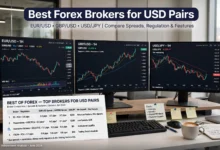
Top Low Spread Forex Brokers Worth Comparing This Year
Below is a rundown of brokers that consistently rank among the tightest-spread options in independent broker comparisons. Spreads change with market conditions, so treat these as a starting point for your own research rather than a guarantee.
1. IC Markets
IC Markets is one of the most frequently cited low spread forex brokers for active traders, and for good reason. Independent broker testing has clocked its commission-free Standard account averaging around 0.8 pips on EUR/USD during the London and New York sessions, noticeably better than the roughly 1.08 pip industry average, while its Raw account has posted averages as tight as 0.02 pips plus a per-lot commission. Commissions on the Raw account run around $3.50 per side, which is standard for ECN-style pricing. IC Markets supports MT4, MT5, and cTrader, and is regulated across multiple jurisdictions including ASIC and CySEC.
2. Pepperstone
Pepperstone is another consistent name on low spread lists. Independent testing has recorded its commission-based Razor account averaging around 0.10 pips on EUR/USD, with an all-in cost near 0.80 pips once the per-lot commission is added. The broker holds licenses from the FCA, ASIC, CySEC, and BaFin, putting it firmly in tier-1 regulatory territory, and it supports MT4, MT5, cTrader, and TradingView.
3. Fusion Markets
Fusion Markets has built its reputation almost entirely around low trading costs. It charges roughly $2.25 per side on its Zero account, which independent reviews put at around a third cheaper than the $3.50 commission charged by competitors such as Pepperstone and IC Markets. Combined with raw spreads that regularly sit under 0.1 pips on EUR/USD, Fusion Markets is a strong option for high-volume traders who care more about total cost than brand recognition. It’s a younger broker, founded in 2019, but it has built a solid reputation with clients over time.
4. Exness
Exness is frequently mentioned as a top pick for cost-conscious traders, particularly those looking for low spread forex broker options with flexible account types. It offers both spread-only and raw spread accounts, high leverage in certain regions, and instant execution on many instruments. Its wide global regulatory footprint makes it accessible to traders in regions where other brokers have restrictions.
5. Interactive Brokers
For traders who want near-institutional pricing, Interactive Brokers is hard to beat. It’s built more for professional and high-volume traders than beginners, with a commission structure that rewards volume and spreads that closely track real interbank pricing. The tradeoff is a steeper learning curve on its trading platform compared to more beginner-friendly brokers.
6. OANDA
OANDA is known for transparent, straightforward pricing and doesn’t rely on aggressive marketing gimmicks to sell its spreads. It’s a solid choice for traders who value clear fee structures, strong research tools, and reliable execution over rock-bottom minimum spreads. OANDA also integrates with TradingView, which is useful if you already do your charting there.
7. IG
IG is one of the more established names in the industry and offers competitive, commission-free spread pricing that appeals to forex-focused traders. It’s particularly strong for traders who want a simple, no-commission structure without sacrificing much on spread competitiveness.
8. FP Markets
FP Markets is known for raw spread accounts, stable infrastructure, and strong support for automated and algorithmic trading. It’s a good fit for traders running expert advisors who need consistent execution alongside tight pricing.
Low Spread vs. Zero Spread Accounts: What’s the Real Difference
“Zero spread” is one of the most misused terms in forex marketing, and it’s worth understanding before you sign up anywhere. A genuine zero spread account means the bid and ask price are identical at the moment of execution, but that almost never happens for free. Brokers offering zero spread accounts almost always charge a commission instead, so you’re not actually avoiding cost, you’re just moving it from the spread column to the commission column.
A few things worth checking before trusting a “zero spread” claim:
- Is the zero spread limited to specific hours or specific pairs, and does it widen during news events?
- What commission replaces the spread, and how does the total compare to a standard account?
- Does the broker publish live or historical spread data, or only a marketing minimum?
Some low spread forex brokers are upfront about all of this, and some aren’t. Reading the fine print, and ideally testing a broker on a demo account first, will save you from an unpleasant surprise on your first live trade.
Key Factors Beyond Spread When Choosing a Broker
Spread is important, but it’s only one piece of the cost puzzle. Here’s what else deserves your attention before you commit real money to any of these low spread forex brokers.
Regulation and Fund Safety
A broker offering the tightest spread in the industry is worthless if your funds aren’t protected. Look for regulation from recognized tier-1 authorities, and check whether the broker segregates client funds from company funds. You can verify a broker’s regulatory status directly through the National Futures Association’s BASIC database, which lists disciplinary history and registration status for firms operating in the United States, or through the U.S. Commodity Futures Trading Commission, which oversees registered forex dealers and futures commission merchants.
Commission Structure
As covered above, spread alone doesn’t tell the full story. Always calculate the all-in cost, meaning spread plus commission, for the account type you’re actually planning to use.
Execution Speed and Slippage
A broker can advertise a tight spread and still cost you money through slow execution or consistent negative slippage, especially during high-volatility events like major economic data releases. Independent execution testing, where available, is worth reviewing before you commit.
Overnight and Inactivity Fees
Some brokers make up for thin spreads with swap fees on positions held overnight, or inactivity fees if you don’t trade for a set period. These rarely show up in headline advertising, so check the fee schedule directly.
Deposit, Withdrawal, and Currency Conversion Costs
If you’re funding your account in a currency your broker doesn’t natively support, conversion fees can eat into savings you thought you were getting from a low spread. Check whether the broker offers accounts in your base currency.
Platform and Tools
MetaTrader 4, MetaTrader 5, and cTrader remain the industry standards, and most low spread forex brokers support at least one. If you rely on automated strategies or expert advisors, confirm the broker’s platform supports the scripting language and order types your strategy needs.
How to Choose the Right Low Spread Broker for Your Trading Style
Not every trader needs the absolute tightest spread available. Here’s a quick way to think about it:
- Scalpers and high-frequency traders should prioritize raw spread accounts with low, transparent commissions and fast execution, since even small cost differences compound quickly at high volume.
- Swing and position traders holding trades for days or weeks can often do fine on a standard, commission-free account, since spread cost matters less relative to the size and duration of the trade.
- Algorithmic traders need to confirm platform compatibility and consistent execution just as much as pricing, since a great spread means little if the platform can’t handle the strategy reliably.
- Beginners are usually better served prioritizing regulation, education resources, and platform usability over squeezing out the last fraction of a pip.
Frequently Asked Questions
What is considered a low spread in forex trading?
Generally, a spread under 1 pip on EUR/USD is considered competitive, and anything under 0.5 pips is considered genuinely tight. Raw spread accounts can dip close to 0.0 pips, though a commission is charged separately.
Are low spread forex brokers safe to use?
Safety depends on regulation, not spread size. A broker can offer tiny spreads and still be poorly regulated, so always confirm licensing with a recognized tier-1 authority before depositing funds. Spread pricing and fund safety are separate issues entirely.
Do low spread accounts cost more in commission?
Often, yes. Raw or ECN-style accounts that advertise near-zero spreads typically charge a per-lot commission to make up the difference. Standard accounts fold the cost into a wider spread instead. Compare the combined, all-in cost rather than either number alone.
Which forex pairs typically have the lowest spreads?
Major pairs with the highest liquidity, particularly EUR/USD, USD/JPY, and GBP/USD, generally carry the tightest spreads. Exotic and minor pairs almost always have wider spreads due to lower trading volume.
Can spreads change during the trading day?
Yes. Spreads widen during major news releases, low-liquidity hours such as late in the New York session, and around market opens. A broker’s advertised minimum spread is rarely the spread you’ll see around high-impact economic events.
Conclusion
Choosing among the best low spread forex brokers comes down to looking past the headline number and understanding the full cost of trading with each one, including commissions, execution quality, regulation, and any fees that don’t show up until after you’ve deposited. Brokers like IC Markets, Pepperstone, Fusion Markets, Exness, and Interactive Brokers each offer genuinely competitive pricing, but the right fit depends on your trading style, whether that’s scalping, swing trading, or running an automated strategy.
Take the time to compare all-in costs on a demo account before committing real capital, and remember that a slightly wider spread from a well-regulated, reliable broker is often a better trade than the tightest spread from one you can’t fully trust.