Best Futures Prop Firms for US Traders
Best futures prop firms for US traders in 2026, compared by pricing, funding rules, drawdowns, platforms, payouts, and reliability.

For US-based traders, choosing the right futures prop firm requires more than comparing advertised account sizes. Evaluation fees, maximum drawdown, consistency requirements, trading platforms, withdrawal conditions, and customer support can significantly influence the overall experience. A firm offering a generous profit split may not necessarily be the best choice if its withdrawal requirements are difficult to meet.
The market includes established names such as Topstep and Apex Trader Funding, alongside newer competitors such as MyFundedFutures, Tradeify, and Lucid Trading. Each company offers different account structures, evaluation processes, and payout arrangements.
This guide compares seven notable futures prop firms for US traders in 2026. It explains their advantages, potential limitations, funding models, and important selection criteria. Whether you are a beginner learning to trade futures or an experienced trader looking for additional trading opportunities, this comparison will help you make a more informed decision.
1. Best Futures Prop Firms for US Traders: Top 7 Choices
Selecting the right proprietary trading company depends on your experience, trading strategy, budget, and financial objectives. The following firms are worth comparing because they have established visibility in the futures prop trading market and offer different approaches to trader evaluations and funding.

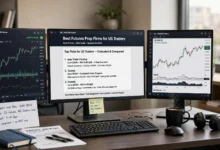
The ranking below is an editorial shortlist, not an independently audited performance ranking. Program conditions can change, so always verify the latest official terms before purchasing an evaluation.
1. Topstep – Best for Structured Futures Trading
Topstep is one of the best-known names in the futures proprietary trading industry. Established in Chicago, the company has built its business around helping traders demonstrate consistency through a structured evaluation process.
Its Trading Combine provides an environment where participants must meet specific profit objectives while respecting predefined risk limits.
Key features:
- Structured evaluation process.
- Futures-focused trading programs.
- End-of-day risk-management framework.
- Access to the TopstepX trading platform.
- Defined qualification and withdrawal requirements.
- Educational resources and trader development materials.
Advantages
Topstep is particularly attractive to traders who prefer a clearly organized evaluation rather than an instant-funded model. Its established presence and futures-focused business make it a relevant starting point for traders comparing funding providers.
Its educational resources can also be useful for individuals who want to improve their trading discipline.
Potential disadvantages
Traders must understand the evaluation subscription, account activation conditions where applicable, and payout requirements. The rules governing funded accounts can differ from those used during evaluation.
Who should choose Topstep?
Topstep may suit traders who prefer a structured evaluation, value educational resources, and primarily trade established futures markets.
Official website: https://www.topstep.com/
2. Apex Trader Funding – Best for Multiple Account Options
Apex Trader Funding is another prominent company in the futures prop trading sector. It is known for offering different evaluation account configurations and a range of platform integrations.
Traders can compare different account sizes and risk-management structures according to their trading preferences.
Key features:
- Multiple evaluation account sizes.
- Different drawdown configurations.
- Futures trading access.
- Integration with supported trading platforms.
- Defined payout eligibility requirements.
- Options for traders with different experience levels.
Advantages
Apex attracts traders who want flexibility when selecting an evaluation structure. The availability of different account configurations makes it possible to compare risk parameters instead of choosing a single standardized program.
Another important consideration is its broad recognition within the retail futures trading community.
Potential disadvantages
Apex has multiple account rules, and traders should not assume that all plans have identical conditions. Trailing drawdown calculations, payout eligibility, minimum trading days, and consistency requirements deserve particular attention.
Promotional pricing can also make it difficult to compare the normal long-term cost of different plans.
Who should choose Apex Trader Funding?
It may be suitable for experienced futures traders who understand drawdown calculations and want to compare different account structures.
Official website: https://apextraderfunding.com/
3. MyFundedFutures – Best for Different Funding Pathways
MyFundedFutures has gained considerable attention among traders looking for alternative ways to access futures trading programs.
The company offers several program structures, including Builder, Rapid, Rapid EOD, and Pro options. These programs can differ in pricing, drawdown arrangements, payout eligibility, and trading conditions.
Key features:
- Multiple account pathways.
- Different risk-management configurations.
- Futures-focused funding programs.
- Supported trading platform integrations.
- Defined profit-sharing arrangements.
- Different payout structures across programs.
Advantages
The main attraction of MyFundedFutures is the ability to compare several funding pathways under one provider. Traders can consider whether they prefer an evaluation-based route or a program with different funding and payout arrangements.
Its variety of programs also makes it relevant to traders with different approaches to risk management.
Potential disadvantages
Having multiple programs means traders must carefully examine the conditions attached to each one. A payout policy available under one program should not be assumed to apply to another.
It is particularly important to understand minimum balances, payout limits, consistency requirements, and any restrictions that apply after receiving funding.
Who should choose MyFundedFutures?
This firm may appeal to traders who want to compare several futures funding models and select one that matches their strategy.
Official website: https://myfundedfutures.com/
4. Tradeify – Best for Flexible Program Structures
Tradeify is a futures prop trading provider that has attracted attention for its different evaluation and funding pathways.
Its Growth and other account options provide traders with different structures to consider when comparing funded futures programs.
Key features:
- Multiple futures funding options.
- Different account configurations.
- Published trading and risk-management conditions.
- Supported third-party trading platforms.
- Defined withdrawal requirements.
- Options designed around different trading preferences.
Advantages
Tradeify is worth considering because its program variety allows traders to compare different funding structures rather than concentrating exclusively on the advertised account balance.
For traders who value flexibility, its account options can be an important part of the selection process.
Potential disadvantages
Different plans may have different drawdown calculations, payout schedules, and trading restrictions. Some features may be available only through particular programs.
Always calculate the total cost, including evaluation fees, resets, platform expenses, and other applicable charges.
Who should choose Tradeify?
Tradeify may suit traders who want to compare different account structures and are comfortable reviewing detailed program conditions before enrolling.
Official website: https://tradeify.co/
5. Earn2Trade – Best for Trading Education
Earn2Trade is particularly relevant to traders who value education alongside their evaluation program.
The company offers structured futures trading evaluations, including its Gauntlet Mini program, with defined profit targets and risk-management requirements.
Key features:
- Futures trading evaluations.
- Educational trading resources.
- Structured performance requirements.
- Risk-management rules.
- Supported trading software integrations.
- Different qualification pathways.
Advantages
Education is an important differentiator for Earn2Trade. Traders who want to develop their technical knowledge and improve their understanding of futures markets may find its resources useful.
Its structured evaluation can also encourage participants to develop a more consistent approach to trading.
Potential disadvantages
The evaluation process requires participants to meet specific performance and risk requirements. Traders should understand the applicable consistency rules, subscription costs, withdrawal conditions, and profit-sharing arrangements.
The advertised funding amount should not be confused with money that a trader can withdraw.
Who should choose Earn2Trade?
Earn2Trade may be a good option for traders who value educational support and prefer a structured evaluation environment.
Official website: https://www.earn2trade.com/
6. Take Profit Trader – Best for a Clear Evaluation-to-Funded Pathway
Take Profit Trader is another recognized name in the futures funding industry.
Its Test and PRO programs provide a pathway through which traders can demonstrate their abilities and potentially qualify for a funded trading arrangement.
Key features:
- Evaluation-based trading programs.
- Test and PRO account structures.
- Published risk-management requirements.
- Futures market access.
- Defined payout and withdrawal policies.
- Different profit-sharing arrangements.
Advantages
The separation between evaluation and funded stages gives traders a structured process to understand before committing to a program.
Traders who want to compare evaluation requirements with subsequent funded-account conditions may find this approach useful.
Potential disadvantages
The transition from an evaluation account to a funded account can introduce additional rules. Traders should review the differences between the Test and PRO stages, including drawdown calculations, withdrawal requirements, and applicable fees.
Who should choose Take Profit Trader?
This provider may appeal to traders who prefer a recognizable evaluation-to-funded progression and want clearly documented program conditions.
Official website: https://takeprofittrader.com/
7. Bulenox – Best for Comparing Risk Configurations
Bulenox is a futures proprietary trading provider offering evaluation and funding options with different account configurations.
It is relevant to traders comparing traditional evaluation structures with alternative funding arrangements.
Key features:
- Multiple account options.
- Different drawdown configurations.
- Futures trading programs.
- Defined evaluation objectives.
- Profit-sharing arrangements.
- Published account-specific trading requirements.
Advantages
Bulenox provides another alternative for traders who want to compare evaluation pricing and risk-management structures.
The availability of different configurations means traders can assess which program aligns with their trading experience and financial limits.
Potential disadvantages
The firm offers different program conditions, so traders should examine the precise account selected rather than relying on general advertising.
Important details include drawdown methods, daily loss restrictions, payout eligibility, and any additional charges.
Who should choose Bulenox?
Bulenox may be worth considering for traders who want to compare different futures evaluation structures before choosing a provider.
Official website: https://bulenox.com/
2. Comparison of the Best Futures Prop Firms for US Traders
The following table summarizes the main differences between the seven providers.
| Prop firm | Main strength | Funding approach | Best suited for |
|---|---|---|---|
| Topstep | Structured evaluation | Evaluation-based | Disciplined futures traders |
| Apex Trader Funding | Multiple configurations | Evaluation-based | Experienced traders |
| MyFundedFutures | Different funding pathways | Multiple programs | Flexible trading preferences |
| Tradeify | Program variety | Multiple programs | Traders comparing account structures |
| Earn2Trade | Educational resources | Evaluation-based | Learning-focused traders |
| Take Profit Trader | Evaluation-to-funded pathway | Test and PRO | Structured trading approaches |
| Bulenox | Risk configuration choices | Multiple programs | Evaluation comparison |
These providers should not be considered identical. The best choice depends on the individual program, rather than the company name alone.
For example, a trader who prefers end-of-day drawdown calculations may reject a program that uses intraday trailing drawdown. Similarly, a trader who requires frequent withdrawals may prioritize payout conditions over a larger advertised account balance.
3. What Makes a Futures Prop Firm Suitable for US Traders?
Not every proprietary trading company offers the same experience to American residents. Some international providers restrict access based on location, payment arrangements, or regulatory considerations.
Before purchasing an evaluation, examine the following factors.
US Residency and State Eligibility
The first requirement is confirming that the company accepts traders residing in the United States.
Do not rely exclusively on an advertisement stating that a firm operates internationally. Check its current restricted-country policy and whether any state-specific limitations apply.
Also verify whether its payment provider supports your location.
Supported Futures Markets
US futures traders commonly participate in markets offered through CME Group exchanges.
Popular instruments include:
- E-mini S&P 500 futures (ES).
- Micro E-mini S&P 500 futures (MES).
- E-mini Nasdaq-100 futures (NQ).
- Micro E-mini Nasdaq-100 futures (MNQ).
- Gold futures (GC).
- Crude oil futures (CL).
Not every program supports every contract. Check the firm’s instrument list, contract limits, trading hours, and applicable commissions.
Trading Platform Compatibility
A suitable platform can significantly influence execution, analysis, and daily trading performance.
Common platform names in the futures industry include:
- NinjaTrader.
- Tradovate.
- Quantower.
- TradingView.
- Rithmic-supported trading software.
- WealthCharts.
Check whether your preferred platform is supported during both the evaluation and funded stages.
Transparent Fees
A low advertised evaluation price does not automatically make a program inexpensive.
Calculate the total potential cost, including:
- Initial evaluation fee.
- Monthly subscription.
- Account activation fee.
- Reset charges.
- Market data fees.
- Platform charges.
- Withdrawal-related expenses, where applicable.
A transparent fee structure makes it easier to compare providers and avoid unexpected expenses.
4. Understanding Futures Prop Firm Drawdown Rules
Drawdown is one of the most important considerations when evaluating a proprietary trading program.
It represents the amount a trading account can lose before reaching its predefined risk limit.
Different companies calculate drawdown differently, and understanding these calculations can help traders avoid unexpected account violations.
Intraday Trailing Drawdown
Intraday trailing drawdown adjusts according to account performance during the trading session.
For example, if a trader reaches a new account high, the permitted loss threshold may move upward.
This structure can become challenging when unrealized profits cause the threshold to increase before a trade is closed.
End-of-Day Trailing Drawdown
End-of-day, or EOD, trailing drawdown generally calculates changes at the end of the trading session rather than continuously throughout the day.
This can provide traders with a different risk-management experience.
However, the precise calculation depends on the provider’s rules, including how balances, unrealized gains, and commissions are treated.
Static Drawdown
Static drawdown establishes a fixed maximum loss threshold.
Unlike trailing drawdown, the threshold does not continuously move upward with account profits.
Some traders prefer this approach because it makes the maximum permitted loss easier to understand.
Important: Never select a program based solely on its advertised drawdown amount. Read the complete rulebook and understand how the firm calculates account equity and violations.
5. Profit Splits and Payout Rules: What US Traders Should Know
A profit split determines how trading profits are distributed between the trader and the proprietary trading provider.
For example, a hypothetical 90% profit split means that the trader receives 90% of eligible profits, subject to the firm’s applicable conditions.
However, the advertised percentage does not tell the entire story.
Understand the Withdrawal Schedule
Some firms allow withdrawals after a specified number of profitable trading days. Others require traders to satisfy minimum balance thresholds or additional consistency conditions.
Before choosing a provider, check:
- Minimum withdrawal amount.
- Required profitable trading days.
- Maximum withdrawal limits.
- Minimum account balance.
- First payout eligibility.
- Withdrawal processing procedures.
- Rules applicable after a payout.
Understand Consistency Requirements
Consistency rules are designed to prevent traders from qualifying through one unusually large winning day while performing poorly during the rest of the evaluation.
A firm may limit how much of the total profit can come from a single trading day.
This means that traders should understand whether their preferred trading strategy fits the firm’s consistency requirements.
Distinguish Simulated Profits From Cash Payouts
An important distinction is that a displayed funded account balance does not necessarily represent actual capital deposited into a personal brokerage account.
Many futures prop programs use simulated trading environments, including during certain funded stages. Eligible payouts are governed by contractual terms and the firm’s policies.
Always establish whether the trading environment is simulated or live and how the provider calculates compensation.
6. How to Choose the Best Futures Prop Firm for Your Trading Style
The right proprietary trading firm should complement your existing trading strategy rather than force you to change your entire approach.
Consider these factors before making a decision.
For Beginner Futures Traders
Beginners should prioritize education, clear rules, and manageable evaluation expenses.
A complicated account structure can make it difficult to understand why a trading account fails.
Look for:
- Simple evaluation conditions.
- Educational materials.
- Transparent pricing.
- Clear drawdown explanations.
- Responsive customer support.
- Reasonable contract limits.
Earn2Trade and Topstep are relevant providers to compare if education and structured evaluations are important.
For Experienced Day Traders
Experienced day traders may prioritize platform performance, contract limits, commissions, and drawdown calculations.
A program with flexible account options may be more attractive than one with a rigid structure.
Apex Trader Funding, Tradeify, and MyFundedFutures are worth comparing in this category.
For Traders With Limited Budgets
Traders with limited budgets should focus on total evaluation expenses instead of promotional prices.
Purchasing multiple evaluations or repeatedly paying reset fees can quickly become expensive.
Set a maximum evaluation budget before enrolling. Never use money needed for rent, household expenses, debt payments, or emergency savings.
For Traders Seeking Frequent Payouts
If withdrawal frequency is important, compare the actual payout policy rather than simply looking at the advertised profit split.
A program offering a smaller profit share but more practical withdrawal conditions may be preferable to a higher percentage with restrictive eligibility requirements.
7. Important Risks of Using Futures Prop Firms in the USA
Futures proprietary trading programs can provide an opportunity to demonstrate trading skills, but they are not risk-free.
Understanding the potential disadvantages is essential.
Evaluation Fees Can Accumulate
Repeatedly purchasing evaluations can create substantial expenses.
A trader may pass one evaluation but subsequently violate funded-account rules. The cost of starting again can reduce the financial benefit of the program.
Funded Accounts Have Strict Requirements
Funded programs generally impose rules relating to maximum losses, position sizes, consistency, and trading conduct.
A trader can lose access to an account by violating these requirements, even after generating profits.
Payouts Are Not Guaranteed
Passing an evaluation does not guarantee that a trader will receive a withdrawal.
Payouts depend on the applicable agreement, trading performance, eligibility conditions, and the provider’s approval procedures.
Company Policies Can Change
Proprietary trading companies can update evaluation prices, payout schedules, account structures, and eligibility requirements.
A program that was suitable several months ago may have different conditions today.
Save a copy of the rules and terms applicable when purchasing an evaluation.
Regulatory and Counterparty Considerations
US futures markets operate within a regulated framework, but this does not mean every futures prop firm is itself a regulated futures commission merchant or registered broker.
Understand which entity provides the trading environment, which entity handles payments, and what contractual relationship you are entering.
Useful official resources include:
- Commodity Futures Trading Commission (CFTC): Information about US derivatives regulation, customer protection, and market oversight.
- National Futures Association (NFA) BASIC: A resource for checking registration and disciplinary information about relevant futures industry professionals and firms.
- CME Group Education: Educational materials covering futures markets, contracts, and trading fundamentals.
These resources can help traders understand the broader futures industry and independently investigate relevant entities.
8. Practical Tips for Passing a Futures Prop Firm Evaluation
Passing an evaluation requires more than identifying profitable trading opportunities. Consistent risk management is equally important.
The following practices can help traders approach evaluations more systematically.
Develop a Written Trading Plan
A written plan should establish:
- Which futures contracts you will trade.
- Your preferred trading sessions.
- Entry and exit criteria.
- Maximum daily loss.
- Maximum position size.
- Stop-loss requirements.
- Conditions under which you will stop trading.
Having predefined rules reduces emotional decision-making.
Start With Smaller Position Sizes
Trading smaller positions can help protect an evaluation account from sudden losses.
For example, a trader learning to trade the Nasdaq futures market may initially prefer micro contracts rather than immediately trading larger contracts.
Position size should reflect the available drawdown and the risk associated with each setup.
Avoid Revenge Trading
Revenge trading occurs when traders attempt to recover losses through impulsive or excessively large trades.
It can quickly lead to account violations.
Establish a daily loss limit and stop trading when it is reached.
Track Performance Consistently
Maintain a trading journal that records:
- Entry and exit prices.
- Contract quantities.
- Trading commissions.
- Profit and loss.
- Market conditions.
- Strategy used.
- Emotional state.
- Reasons for entering and exiting.
Reviewing this information helps identify recurring mistakes and opportunities to improve.
Practice Before Purchasing an Evaluation
Use a simulated trading account to test your strategy before paying for a proprietary trading evaluation.
This allows you to understand market volatility, contract specifications, and platform functionality without repeatedly spending money on evaluations.
9. Frequently Asked Questions About Futures Prop Firms for US Traders
What are the best futures prop firms for US traders in 2026?
Some notable options include Topstep, Apex Trader Funding, MyFundedFutures, Tradeify, Earn2Trade, Take Profit Trader, and Bulenox.
The best provider depends on your preferred drawdown method, evaluation budget, trading platform, and payout requirements.
Can US residents join futures prop firms?
Yes. Several futures proprietary trading providers accept US residents. However, eligibility should be checked individually because restrictions can differ by company, state, payment provider, and account program.
Do futures prop firms provide real trading capital?
Not necessarily. Many providers use simulated accounts for evaluations and certain funded stages. Some arrangements may involve live trading or other contractual structures.
Always check the specific program agreement to understand how trading activity is handled.
How much does a futures prop firm evaluation cost?
Prices vary according to account size, program type, promotional offers, and billing structure.
Some providers charge one-time fees, while others use recurring subscriptions. Activation, reset, data, and platform charges may increase the total expense.
Which futures prop firm offers the highest profit split?
Profit-sharing terms vary between companies and programs. Some advertise percentages of 90% or higher, while others offer different arrangements.
Compare the actual withdrawal conditions, caps, and eligibility requirements before choosing a provider.
Are futures prop firms suitable for beginners?
They can provide a structured environment for learning trading discipline, but they are not necessarily suitable for every beginner.
New traders should understand futures contracts, leverage, margin, and risk management before paying for an evaluation.
What is the difference between intraday and EOD drawdown?
Intraday trailing drawdown can adjust during a trading session as account equity reaches new highs. EOD drawdown generally adjusts at the end of the trading day.
The precise calculations depend on the provider’s rules.
Can I trade E-mini and Micro futures with a prop firm?
Many futures prop firms support instruments such as ES, MES, NQ, and MNQ. However, contract availability and position limits vary by account program.
Check the supported instruments and contract limits before purchasing.
Conclusion
Choosing among the Best Futures Prop Firms for US Traders requires careful consideration of evaluation costs, drawdown rules, trading platforms, profit splits, payout eligibility, and US residency requirements. Topstep is worth considering for its structured evaluation and educational resources, while Apex Trader Funding offers multiple account configurations. MyFundedFutures and Tradeify provide different program pathways, Earn2Trade emphasizes education, Take Profit Trader offers a structured evaluation-to-funded route, and Bulenox provides additional account configurations to compare.
Ultimately, the best futures prop firm is the one whose rules, costs, and trading environment match your strategy and financial circumstances. Review official terms, test your strategy in a simulated environment, and prioritize consistent risk management before committing money to any evaluation.