Best Forex Brokers for Metals and Commodities
Compare the best forex brokers for metals and commodities trading, from spreads and leverage to regulation, platforms, and account costs.
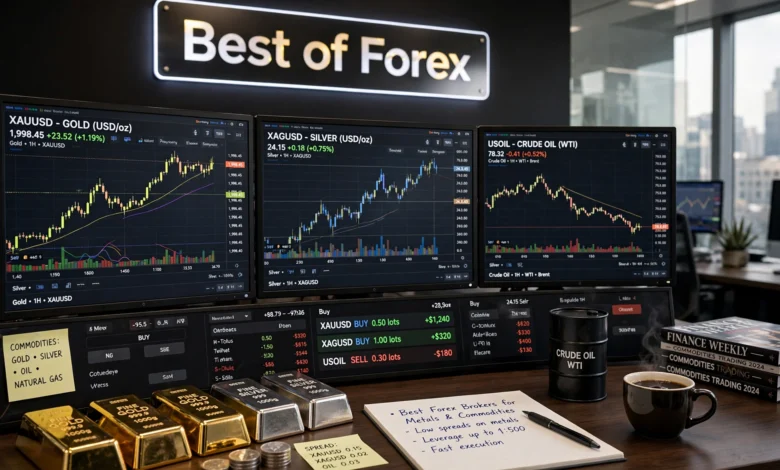
Finding the best forex brokers for metals and commodities takes more than picking whichever name shows up first in a Google ad. Gold, silver, oil, and natural gas trade differently than currency pairs. Spreads widen fast during news events, margin requirements shift depending on volatility, and not every broker even offers a full commodities lineup. Some stick to gold and silver CFDs. Others give you access to a broader basket that includes agricultural products and energy contracts.
If you’ve ever tried to trade XAU/USD during a Federal Reserve announcement and watched your spread triple in seconds, you already know that broker selection matters more here than it does with major currency pairs. A platform that handles EUR/USD beautifully can still fall short when it comes to metals and commodities execution.
This guide walks through what actually separates a solid commodities trading broker from a mediocre one, what to check before funding an account, and which types of brokers tend to serve metals and commodities traders best. Whether you’re a swing trader building a small gold position or someone who wants exposure to oil and silver alongside your usual forex trades, the details below should help you narrow the list down to brokers worth your time.
What Makes a Broker Good for Metals and Commodities Trading
Not every forex broker treats commodities as a priority. Many add gold and oil as an afterthought, with wider spreads and clunky execution compared to their currency offerings. Here’s what to look for instead.
1. Regulation and Fund Safety
This comes first for a reason. A regulated forex broker operating under a recognized authority gives you legal protection if something goes wrong. Look for licensing from bodies such as:
- The Financial Conduct Authority (FCA) in the UK
- The Australian Securities and Investments Commission (ASIC)
- The Cyprus Securities and Exchange Commission (CySEC)
- The National Futures Association (NFA) in the US
Regulated brokers are required to keep client funds in segregated accounts, separate from the company’s own operating capital. That single requirement matters a great deal if a broker ever runs into financial trouble. According to the U.S. Commodity Futures Trading Commission, verifying a firm’s registration status is one of the most basic and effective steps a trader can take before depositing money (CFTC.gov).
2. Range of Metals and Commodities Available
Some brokers only offer gold and silver. Others give traders access to platinum, palladium, crude oil (WTI and Brent), natural gas, copper, and agricultural commodities like coffee, wheat, and cotton. If you want to diversify beyond precious metals, check the broker’s full instrument list before signing up. A broker with a wide commodities trading menu gives you more room to build a diversified strategy without switching platforms.
3. Spreads and Commissions
Spreads on gold (XAU/USD) and silver (XAG/USD) can vary significantly between brokers, sometimes by a wide margin during volatile sessions. A broker advertising tight spreads on EUR/USD isn’t necessarily competitive on metals. Always check:
- Typical spread on gold during normal market hours
- Spread behavior during high-impact news releases
- Whether the broker charges a separate commission on top of the spread
- Overnight swap rates for holding metals positions
Swap fees matter more than most traders expect, especially for anyone holding metals or oil positions overnight for several days.

4. Leverage and Margin Requirements
Leverage on commodities is usually lower than on major forex pairs because of higher volatility. A broker might offer 1:500 on currency pairs but cap gold at 1:200 or lower. This isn’t a red flag, it’s a risk control measure. Still, it’s worth comparing margin requirements across a few brokers since they do vary, and margin calls on metals can happen quickly when prices move sharply.
5. Trading Platform and Execution Speed
MetaTrader 4, MetaTrader 5, and cTrader remain the most common platforms for metals and commodities trading. Look for:
- Fast order execution with minimal slippage
- Reliable price feeds during volatile sessions
- Access to charting tools built for commodities analysis
- Mobile app functionality if you trade on the go
Execution speed matters more in commodities than people realize. A few seconds of delay during a gold price spike can mean a noticeably worse fill.
Top Types of Brokers for Metals and Commodities Trading
Rather than naming a single “best” broker (since the right fit depends heavily on your location, account size, and trading style), it helps to understand the categories of brokers that tend to perform well for metals and commodities trading.
ECN and STP Brokers
ECN (Electronic Communication Network) and STP (Straight Through Processing) brokers route your orders directly to liquidity providers rather than taking the other side of your trade themselves. This model typically results in:
- Tighter spreads during normal conditions
- Transparent pricing with a separate commission
- Reduced conflict of interest between broker and trader
For active metals traders who care about execution quality, ECN brokers are usually the stronger choice, particularly for gold and oil where price accuracy matters.
Market Maker Brokers
Market maker brokers set their own prices and take the opposite side of client trades. This isn’t inherently bad, many are well-regulated and reliable, but it does mean wider spreads are more common, especially on commodities. These brokers often work well for beginners because they tend to offer fixed spreads, which makes cost planning easier.
Multi-Asset Brokers
Multi-asset brokers combine forex, commodities, indices, and sometimes stocks or crypto under one account. If you want to trade gold alongside EUR/USD and the S&P 500 without juggling multiple platforms, this structure is usually the most practical.
Key Factors to Compare Before Choosing a Broker
When you’re narrowing your list of forex brokers for metals, run through this checklist.
- Regulatory status – Confirm the broker is licensed in a jurisdiction that offers real oversight, not just a registration number on a website.
- Deposit and withdrawal process – Check processing times and whether there are hidden withdrawal fees.
- Minimum deposit requirement – Some brokers allow accounts starting at $50-$100, others require $500 or more.
- Customer support quality – Test their support before funding a live account. Slow responses during a live trading issue can cost you money.
- Educational resources – Especially useful if you’re new to commodities trading and want to understand contract specifications, lot sizes, and margin calculations.
- Demo account availability – A demo account lets you test spreads and execution on gold and oil without risking real capital first.
How to Evaluate Gold and Silver Trading Conditions Specifically
Since gold and silver make up the bulk of retail metals trading, it’s worth digging into these two instruments specifically when comparing brokers.
Gold (XAU/USD)
Gold is one of the most heavily traded commodities in the retail forex world. When comparing brokers for gold trading, pay attention to:
- Contract size – Standard lot sizes can differ between brokers
- Minimum trade size – Some brokers allow micro-lots, useful for smaller accounts
- Spread during Asian, London, and New York sessions – Liquidity, and therefore spread quality, shifts throughout the trading day
Silver (XAG/USD)
Silver tends to be more volatile than gold relative to its price, which means spread and slippage differences between brokers become even more noticeable. If silver trading is a priority, test a broker’s execution on a demo account during a volatile session before committing real funds.
Risk Management When Trading Metals and Commodities
Commodities can move sharply on geopolitical news, supply disruptions, and central bank policy shifts. A few practical habits go a long way:
- Use stop-loss orders on every position, no exceptions
- Avoid over-leveraging, even if your broker allows high leverage on metals
- Keep an eye on economic calendars for events likely to move gold, oil, or silver
- Size positions based on account risk percentage, not just gut feeling
The International Monetary Fund has noted that commodity markets carry distinct volatility patterns compared to currency markets, driven by supply shocks and geopolitical factors that don’t always correlate with forex movements (IMF.org). That’s a good reminder that a strategy built purely around currency pairs won’t automatically translate to gold or oil trading.
Common Mistakes Traders Make When Choosing a Broker for Commodities
- Ignoring swap fees on overnight positions – These add up fast for swing traders holding metals for days or weeks.
- Focusing only on forex spreads – A broker can be excellent for EUR/USD and mediocre for gold.
- Skipping the regulation check – Chasing high leverage or bonuses without confirming the broker is properly licensed.
- Not testing execution during volatile periods – Spreads that look tight on a quiet Tuesday afternoon can behave very differently during a Non-Farm Payrolls release.
- Overlooking withdrawal terms – Some brokers make deposits easy and withdrawals frustrating. Read the fine print before funding an account.
Frequently Asked Questions
Do I need a separate broker for commodities trading, or can I use my forex broker? Most established forex brokers now offer commodities as part of their standard account, so a separate broker usually isn’t necessary. Just confirm the specific instruments and trading conditions before assuming your existing broker covers what you need.
What’s the minimum amount needed to start trading gold or silver? This varies widely by broker. Some allow accounts with as little as $50-$100 using micro-lots, while others set higher minimums. Check the broker’s specific requirements and consider starting small while you learn how metals behave differently from currency pairs.
Is leverage on commodities the same as leverage on forex pairs? No. Leverage on metals and commodities is typically lower than on major forex pairs due to higher price volatility. This is a standard risk control across most regulated brokers, not something specific to one company.
Conclusion
Choosing among the best forex brokers for metals and commodities comes down to a handful of concrete factors: solid regulation, competitive spreads specifically on gold, silver, and oil rather than just forex pairs, a trading platform that handles volatility without lag, and transparent costs including swap fees.
Rather than chasing the flashiest bonus offer, take the time to test a broker’s execution on a demo account during an active trading session, confirm their licensing with the relevant regulatory body, and compare their commodities-specific spreads against at least two or three competitors. A little diligence upfront saves a lot of frustration once real money is on the line, and it puts you in a far better position to trade metals and commodities with confidence.