Best 7 Forex Pairs to Trade in a Volatile Market
Best forex pairs to trade in a volatile market: proven picks, risk tips, and how to spot opportunity when prices swing hard.
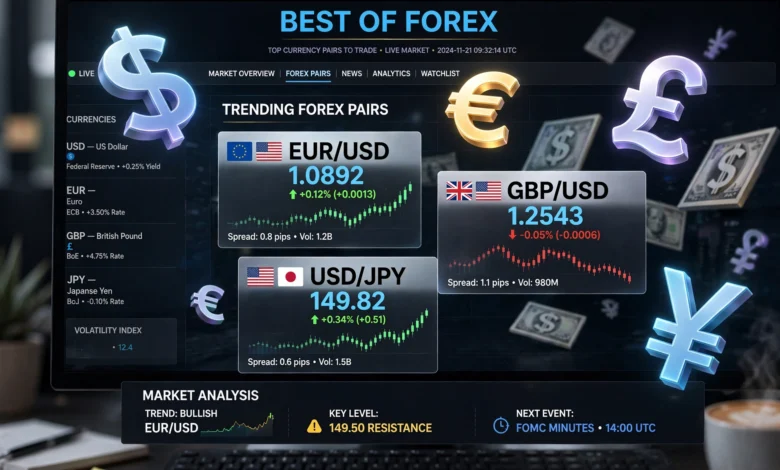
Best forex pairs to trade in a volatile market aren’t always the ones traders default to out of habit. When central banks shift policy overnight, when a surprise inflation print hits the wires, or when geopolitical tension spikes, currency prices can move faster and farther than usual. That’s exactly when some traders panic and others quietly build their best trades of the month.
Volatility isn’t the enemy. It’s the raw material of a forex trader’s edge. Wide price swings mean bigger potential gains, but they also mean bigger potential losses if you’re trading the wrong pair with the wrong plan. The trick is knowing which currency pairs actually behave well under pressure, which ones become unpredictable messes, and how to size your risk so a volatile session doesn’t wipe out weeks of steady gains.
In this article, we’ll walk through the currency pairs that tend to offer the best balance of liquidity and movement during volatile conditions, explain what drives that volatility in the first place, and cover the practical risk controls that separate traders who survive turbulent markets from those who don’t. Whether you’re trading majors, minors, or the occasional exotic pair, this guide will help you approach volatility with a plan instead of a guess.
What Makes a Forex Pair “Volatile”?
Before picking the best forex pairs to trade, it helps to understand what volatility actually means in currency markets. Volatility refers to how much and how quickly the price of a currency pair moves over a given period. A pair can be volatile because of:
- Economic data releases such as GDP, employment figures, or inflation reports
- Central bank decisions, including interest rate changes and policy statements
- Geopolitical events, like elections, conflicts, or trade disputes
- Market sentiment shifts, where traders collectively move toward or away from risk
- Low liquidity periods, such as holidays or off-hours trading, which can exaggerate price swings
A pair with high volatility isn’t automatically a good or bad trade. It just means the price range is wider, so both your profit potential and your risk exposure increase. According to Investopedia’s overview of currency volatility, volatility is best measured using tools like standard deviation or the Average True Range (ATR), which we’ll touch on later in this guide.
Why Volatility Isn’t Something to Avoid
A lot of newer traders hear “volatile market” and immediately think danger. That instinct isn’t wrong, but it’s incomplete. Volatile conditions are also where the sharpest trends and the cleanest breakouts tend to form. Ranges that were tight for weeks suddenly open up, giving trend traders and breakout traders room to work with.
The traders who struggle in volatile markets usually aren’t struggling because of the volatility itself. They’re struggling because their position sizing, stop placement, and pair selection were built for calm conditions. Adjust those three things, and volatility becomes an opportunity rather than a threat.
The Best Forex Pairs to Trade in a Volatile Market
Here’s a breakdown of the pairs that consistently show up on professional traders’ watchlists when volatility picks up. Each one has its own personality, so it’s worth understanding what drives its movement before you trade it.
EUR/USD
The EUR/USD is the most heavily traded currency pair in the world, and that liquidity actually works in your favor during volatile periods. Even when price swings widen, spreads on EUR/USD tend to stay relatively tight compared to less liquid pairs. This pair reacts sharply to European Central Bank and Federal Reserve announcements, eurozone inflation data, and U.S. employment reports. Because it’s so widely followed, technical levels tend to hold up reasonably well, which makes it a solid choice for traders who want volatility without total chaos.


GBP/USD
Known among traders as “Cable,” GBP/USD has a reputation for sharp, sudden moves. British economic data, Bank of England decisions, and any news tied to UK political stability can send this pair swinging within minutes. It’s not for the faint of heart, but for traders comfortable with fast price action, GBP/USD often delivers some of the cleanest volatility-driven setups among the majors.
USD/JPY
USD/JPY behaves differently than most pairs because the Japanese yen is considered a safe-haven currency. When global risk sentiment turns negative, money often flows into the yen, and USD/JPY can move sharply as a result. This pair is especially sensitive to shifts in global risk appetite, U.S. Treasury yields, and Bank of Japan policy, which has historically diverged from other major central banks. That divergence has made USD/JPY one of the more consistently volatile pairs in recent years.
AUD/USD
The Australian dollar is closely tied to commodity prices and China’s economic performance, since Australia is a major exporter of raw materials. When there’s uncertainty around global growth or Chinese demand, AUD/USD can swing significantly. It’s also sensitive to shifts in risk sentiment more broadly, since the Aussie dollar is often treated as a “risk-on” currency. Traders who follow commodity markets alongside forex often find this pair rewarding during volatile stretches.
GBP/JPY
If you want volatility, GBP/JPY delivers it in spades. Combining the sharp reactivity of the pound with the safe-haven characteristics of the yen creates a pair known for wide daily ranges. This is sometimes called “the widow maker” among experienced traders because of how quickly it can move against a position. It’s best suited for traders with strong risk management habits and experience handling fast markets, rather than beginners.
USD/CHF
The Swiss franc is another classic safe-haven currency, and USD/CHF often moves inversely to risk sentiment in ways similar to USD/JPY. During periods of market stress, capital tends to flow toward the franc, creating meaningful volatility in this pair. It’s also influenced by Swiss National Bank policy, which has occasionally surprised markets with unexpected interventions.
EUR/JPY
EUR/JPY combines eurozone economic drivers with yen safe-haven flows, making it another pair that tends to move meaningfully during volatile periods. It doesn’t get as much attention as GBP/JPY, but it offers a similar dynamic with somewhat calmer price action, which can suit traders who want yen-driven volatility without quite as much whiplash.
Major vs Minor vs Exotic Pairs During Volatility
Not all currency pairs handle volatility the same way, and understanding the differences matters when deciding where to focus your attention.
Major pairs (like EUR/USD, GBP/USD, USD/JPY) involve the U.S. dollar paired with another heavily traded currency. These pairs generally offer the best liquidity, tighter spreads, and more predictable technical behavior, even when volatility spikes.
Minor pairs (like EUR/GBP or AUD/NZD) don’t include the U.S. dollar but still involve major economies. They can move sharply during volatility, though liquidity is somewhat lower, which sometimes leads to choppier price action.
Exotic pairs (like USD/TRY or USD/ZAR) pair a major currency with one from a smaller or emerging economy. These can be extremely volatile, but the trade-off is wider spreads, lower liquidity, and price action that’s harder to predict using standard technical analysis. Exotic pairs are generally better suited for experienced traders who understand the specific economic and political factors driving that currency.
For most traders navigating volatile conditions, sticking primarily to major and select minor pairs offers the best combination of movement and manageable risk.
Tools to Measure Currency Pair Volatility
Picking the right pair is easier when you’re not just guessing based on headlines. A few practical tools can help:
- Average True Range (ATR) – Measures the average price range of a pair over a set period, giving you a sense of how much movement to expect.
- Bollinger Bands – Widening bands signal increasing volatility, while narrowing bands often precede a breakout.
- Economic calendars – Tracking upcoming data releases and central bank meetings helps you anticipate when volatility is likely to spike.
- Historical volatility charts – Many broker platforms and resources like DailyFX’s market analysis tools provide volatility comparisons across major pairs, which can help with pair selection before you commit capital.
Using even one or two of these tools consistently can meaningfully improve your ability to choose the right pair for current conditions instead of relying on gut feeling alone.
Risk Management Tips for Trading Volatile Pairs
Volatility rewards preparation and punishes carelessness. These practices matter more than usual when markets get choppy:
- Reduce position size. Wider price swings mean your normal position size may expose you to more risk than intended. Scaling down helps keep your risk per trade consistent.
- Widen your stop-loss, but adjust size accordingly. A stop that’s too tight in a volatile market often gets triggered by normal noise rather than an actual reversal.
- Avoid trading directly into major news releases unless that’s specifically your strategy. Spreads often widen and price can gap unpredictably in the seconds around a release.
- Use a risk-per-trade rule, such as risking no more than 1-2% of your account on any single position, regardless of how confident you feel.
- Keep a trading journal during volatile periods specifically, so you can review which pairs and setups actually worked for you versus which ones just felt exciting in the moment.
Common Mistakes to Avoid
Even experienced traders fall into predictable traps when volatility rises. A few worth watching for:
- Overtrading. Fast price action can create a false sense of urgency, leading to too many trades and too little patience.
- Ignoring correlation. Trading multiple pairs that move together (like EUR/USD and GBP/USD) during volatility can multiply your risk without you realizing it.
- Chasing price. Jumping into a move after it’s already extended is one of the most common ways traders get caught on the wrong side of a reversal.
- Underestimating spread costs. Spreads often widen during volatile periods, which eats into profits more than traders expect, especially on shorter timeframes.
Building a Trading Plan Around Volatility
The traders who consistently benefit from volatile markets usually share one habit: they plan for volatility before it happens rather than reacting to it in real time. This means knowing ahead of time which pairs you’ll watch, what your position sizing rules are, and which economic events are on the calendar that week.
A simple approach is to shortlist two or three pairs from the list above that fit your trading style, whether that’s the relative stability of EUR/USD or the sharper moves of GBP/JPY, and build your setups around those specific pairs rather than jumping between whatever looks exciting on a given day. Consistency in pair selection makes it easier to recognize genuine patterns versus noise.
Conclusion
Volatile markets aren’t something to fear once you understand which currency pairs handle price swings well and how to manage risk around them. Pairs like EUR/USD, GBP/USD, USD/JPY, and GBP/JPY each offer distinct volatility profiles driven by economic data, central bank policy, and shifts in global risk sentiment, and choosing the right one depends on your experience level and risk tolerance.
By combining smart pair selection with disciplined position sizing, realistic stop placement, and a clear trading plan, volatility stops being a threat and starts becoming one of the more reliable sources of opportunity in the forex market.